DECODING THE ROCKFORD AVIATION FORECAST
DECODING THE ROCKFORD AVIATION FORECAST
A terminal aerodrome forecast, commonly called a TAF, is an official aviation weather forecast for an airport and its immediate terminal area. It gives pilots, airline dispatchers, and air-traffic planners a concise forecast of conditions that could affect flight operations. [web:111][web:112]
A TAF uses standardized codes to communicate expected wind, visibility, weather, cloud cover, and significant forecast changes. Three terms are especially important when thunderstorms or changing weather may affect an airport: VFR, PROB30, and TEMPO.
VFR
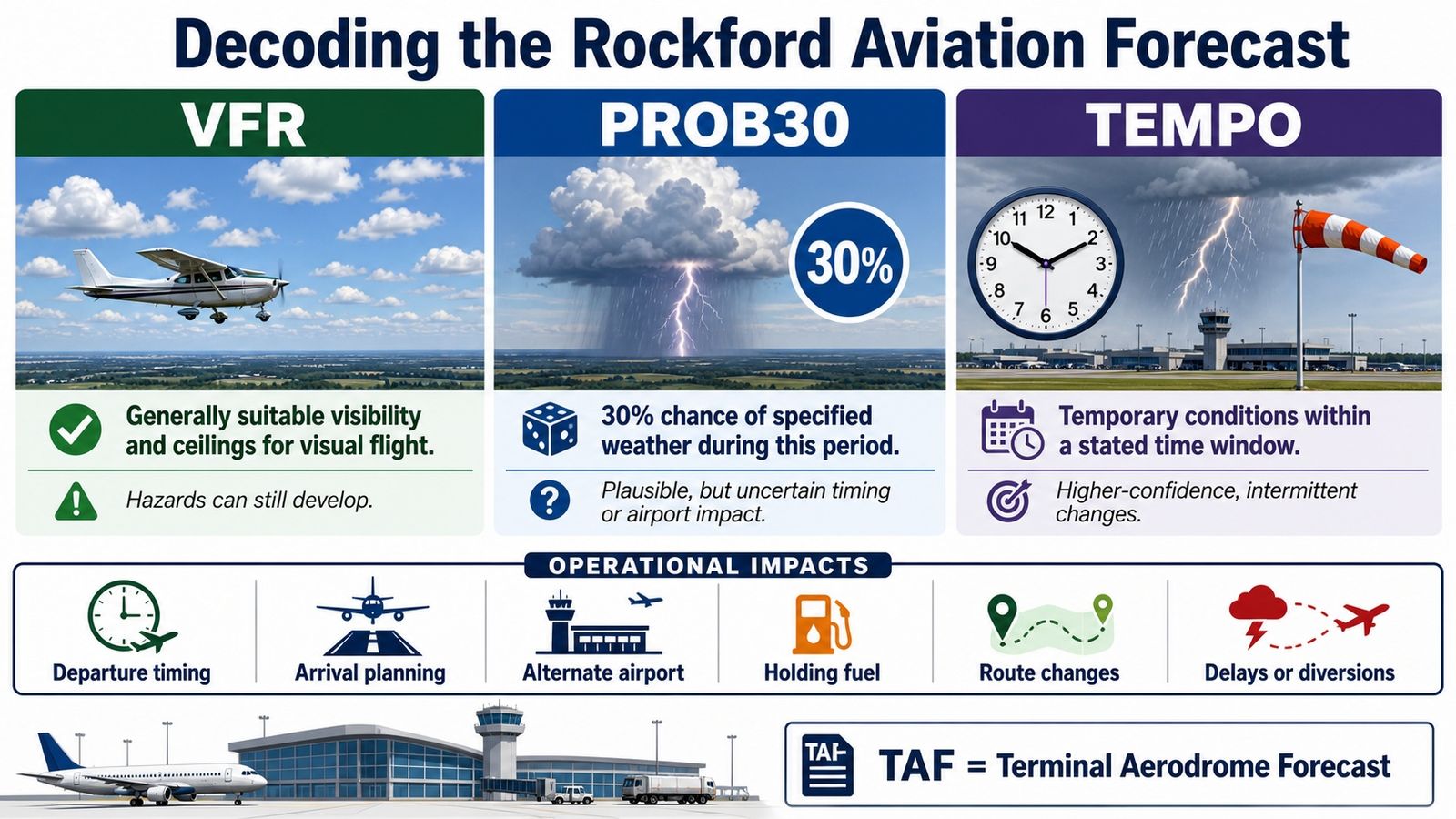
VFR means Visual Flight Rules. When VFR conditions prevail, visibility and cloud ceilings are generally good enough for visual flight operations under applicable aviation regulations.
However, VFR does not mean the entire forecast period is free of hazards. Thunderstorms, turbulence, wind shear, gusty winds, and rapidly changing visibility can still develop near the airport.
PROB30
A PROB30 group indicates a 30 percent probability that a specified weather event—most often thunderstorms or precipitation and associated visibility or cloud changes—will occur during a defined period. [web:112]
It communicates that the threat is plausible but uncertain. Forecasters believe the event has enough potential to mention, but they have lower confidence about the exact timing or whether the airport itself will be directly affected.
TEMPO
A TEMPO group indicates temporary fluctuations in forecast conditions during a defined time window. In an FAA and Aviation Weather Center TAF, these temporary conditions are expected to have a greater than 50 percent probability of occurring, last one hour or less at a time, and cover less than half of the stated period in total. [web:112]
For example, a TEMPO group may indicate intermittent thunderstorms, reduced visibility, lower cloud ceilings, or gusty winds. Conditions not specifically listed in the TEMPO group are generally expected to remain as forecast in the preceding main section of the TAF. [web:112]
These distinctions matter operationally. They can affect:
• Departure timing
• Arrival planning
• Alternate-airport selection
• Fuel planning for holding or diversion
• Route adjustments
• Potential delays or diversions
The codes are brief, but they communicate a carefully calibrated level of forecast confidence. PROB30 signals a lower-confidence possibility, while TEMPO communicates a higher-confidence expectation of temporary conditions within the stated time period. [web:112]
A terminal aerodrome forecast, commonly called a TAF, is an official aviation weather forecast for an airport and its immediate terminal area. It gives pilots, airline dispatchers, and air-traffic planners a concise forecast of conditions that could affect flight operations. [web:111][web:112]
A TAF uses standardized codes to communicate expected wind, visibility, weather, cloud cover, and significant forecast changes. Three terms are especially important when thunderstorms or changing weather may affect an airport: VFR, PROB30, and TEMPO.
VFR
VFR means Visual Flight Rules. When VFR conditions prevail, visibility and cloud ceilings are generally good enough for visual flight operations under applicable aviation regulations.
However, VFR does not mean the entire forecast period is free of hazards. Thunderstorms, turbulence, wind shear, gusty winds, and rapidly changing visibility can still develop near the airport.
PROB30
A PROB30 group indicates a 30 percent probability that a specified weather event—most often thunderstorms or precipitation and associated visibility or cloud changes—will occur during a defined period. [web:112]
It communicates that the threat is plausible but uncertain. Forecasters believe the event has enough potential to mention, but they have lower confidence about the exact timing or whether the airport itself will be directly affected.
TEMPO
A TEMPO group indicates temporary fluctuations in forecast conditions during a defined time window. In an FAA and Aviation Weather Center TAF, these temporary conditions are expected to have a greater than 50 percent probability of occurring, last one hour or less at a time, and cover less than half of the stated period in total. [web:112]
For example, a TEMPO group may indicate intermittent thunderstorms, reduced visibility, lower cloud ceilings, or gusty winds. Conditions not specifically listed in the TEMPO group are generally expected to remain as forecast in the preceding main section of the TAF. [web:112]
These distinctions matter operationally. They can affect:
• Departure timing
• Arrival planning
• Alternate-airport selection
• Fuel planning for holding or diversion
• Route adjustments
• Potential delays or diversions
The codes are brief, but they communicate a carefully calibrated level of forecast confidence. PROB30 signals a lower-confidence possibility, while TEMPO communicates a higher-confidence expectation of temporary conditions within the stated time period. [web:112]
Information
| Author | Simcha |
| Organization | Kol Simcha Productions |
| Website | - |

Copyright 2026 - Spreaker Inc. an iHeartMedia Company

Comments