Contacts
Info
Podcaster
Episodes & Posts
Episodes
Posts
31 OCT 2026 · A podcast host can make an unfamiliar film sound like the most interesting thing you could watch tonight. Then another episode recommends a documentary, a guest mentions a series, and a discussion of television endings adds three more titles. By the weekend, you have plenty of enthusiasm but no clear starting point.The difficult step is deciding which interesting conversation deserves a place in your viewing plans. A small system can preserve the pleasure of discovery while keeping your queue manageable and making the next choice easier to find.
Save the reason as well as the title
When something catches your attention, record three details: the title, the podcast episode that mentioned it, and one sentence explaining why you cared. That last detail is more useful than a star rating you copied without context.Perhaps a filmmaker discussed an unusual editing choice. Perhaps a guest connected a documentary to a subject you already follow. Those are specific reasons to watch. A vague note saying that everyone loves a series tells you much less when you return to it two weeks later.Include an episode timestamp if you want to revisit the discussion. A note on your phone is enough. Keep new recommendations in the same place so you can review them together when you have time to choose what to watch.
Separate curiosity from commitment
An engaging conversation does not necessarily mean the recommended programme will suit you. Hosts have their own preferences, and a guest's enthusiasm can make even a very narrow subject sound universally appealing.Before moving a title into your viewing queue, ask what kind of interest you have. Do you want to experience the story, understand the craft, or simply follow the conversation? Sometimes the podcast has already satisfied your curiosity. That is a useful outcome, not a missed assignment.Look for a brief, spoiler-light description and check the running time. Also notice whether the recommendation came from an interview, a review, or a sponsorship segment. Different contexts deserve different expectations; a lively endorsement is not a guarantee of a good personal match.
Build a three-title queue
Choose one title you intend to watch next, one alternative for a different mood, and one longer-term possibility. Keep everything else in a separate discovery note.For example, your next choice could be a documentary linked to an interview you enjoyed. The alternative might be a lighter film for a tired evening. A longer drama can wait until you have space to follow its story properly.This is particularly helpful when your podcasts accompany commuting or household tasks. Listening time does not translate directly into screen time: a film may need a quiet room and uninterrupted attention that a conversation in your headphones does not. Build the viewing queue around those different conditions.
Match the access option to the plan
Only after selecting the queue should you decide what access you need. Confirm where the titles are available, whether your chosen window covers the episodes you want, and what the product description actually includes.
For a month-long Netflix plan, https://www.avndi.com/p/j7rpn9 is described as a shared profile within a shared account, rather than an independent account or an exclusive personal profile. Keeping your podcast recommendations in your own notes is useful regardless of which viewing arrangement you choose.https://help.netflix.com/en/node/123277 still applies to how the service may be used. Check the current access conditions before purchasing, and do not assume that a profile description changes the platform's household requirements.
Decide when to return to the podcast
A discussion can work differently before and after viewing. Beforehand, it might introduce the director or explain the historical setting. Afterwards, it might help you notice a sound cue, question an interpretation, or compare the ending with another viewer's response.Choose the order that protects your enjoyment. If an episode is built around plot analysis, save it until after watching. If it is a general interview about the creative process, listening first may add context without requiring you to know the story.
Afterwards, write one sentence about what you thought. You may agree with the host, disagree completely, or discover that a different aspect mattered to you. That personal response is more valuable than completing an ever-growing list.Let the next podcast recommendation lead to an experience you can talk about in your own words. Choose a few possibilities deliberately, then leave enough room for your own taste to guide the next conversation.

23 SEP 2026 · Admin has a sneaky way of eating the day. One unpaid invoice turns into three follow-up emails. One unsigned form delays intake. A missed reminder becomes an empty hour on the calendar. Before you know it, you’re finishing notes at 8:30 p.m. with cold coffee nearby. Not ideal.
For solo providers and small teams, those tiny tasks stack up quickly. The majority of respondents reported saving between https://www.writeupp.com/blog/clinicians-save-time-with-practice-management-software?utm_source=openai%5C by using practice management software, with some saving as much as 10+ hours thanks to automation and streamlined workflows.
This guide walks through where digital tools actually help, without making your workday feel more complicated.
Selecting the Ideal System for Therapists and Healthcare Providers
Knowing what software can do is helpful. Choosing what fits your practice is the harder part.A solo therapist and a multi-location clinic do not need the same setup. More features are not always better. Sometimes they’re just more buttons to avoid.
Vendor Questions
Ask vendors direct questions about:
- Data migration
- Training
- Billing support
- Telehealth quality
- Uptime
- Export rights
- Customer service hours
- Contract terms
Do not skip the cancellation rules. Fine print has a nasty habit of showing up when you’re already frustrated.
Solo vs. Group Fit
Finding a https://www.simplepractice.com/blog/what-is-practice-management-software/ for therapists means matching the software to your actual clinical setup.
That includes your treatment style, insurance and cash-pay mix, team size, reporting needs, and growth goals. Solo clinicians may want simplicity above all. Group practices often need stronger permissions, advanced reporting, and team-based workflows.
In the end, the right platform comes down to fit, support, and return on investment. Flashy extras are nice, but they should not lead the decision.
Transforming Daily Operations With Private Practice Tools
Before you add another platform to your life, it helps to ask a simple question: what manual work should this tool replace?The point is not to collect more software. Please, no one needs another tab open just for fun. The real goal is fewer handoffs, fewer repeated steps, and fewer “Did anyone send that?” moments.
Essential Features That Modernize Practice Administration Software
Once you can see the friction, features become easier to evaluate. The best tools should support the way you already work, not force you into some clunky routine that makes everyone grumpy by Wednesday.
Scheduling, Billing, and Payments
Good practice administration software should handle the basics smoothly: appointment scheduling, calendar syncing, automatic reminders, invoices, card payments, and recurring billing.If insurance is part of your workflow, payer updates and claims tracking matter a lot. You don’t want to discover during a busy week that your billing tool only handles half the job.
Telehealth, Notes, and Reporting
Modern private practice software often includes encrypted video sessions, digital intake forms, consent forms, clinical notes, treatment plans, and analytics.
The strongest platforms help you see what’s happening across the practice. That includes attendance, cancellations, revenue, outstanding balances, and clinician productivity.
Once scheduling, billing, telehealth, documentation, and analytics are connected, the software starts to feel less like a tool and more like an operating system for your practice.
Streamlining Clinical Workflows With Healthcare Practice Management Software
Admin does not stop at the front desk. Clinical workflows need structure too, especially when clients move from intake to treatment planning, referrals, follow-ups, and ongoing care.
Intake to Follow-up
Healthcare practice management software helps keep important information in one place. Client records, intake forms, consent forms, progress notes, referrals, and reminders all become easier to find.
That matters more than people think. Searching through email threads and folders is not clinical work, but it sure can steal clinical time.
Team Collaboration
Group practices need more than a shared calendar. They need role-based permissions, secure messaging, internal notes, and task visibility.
A supervisor may need to review caseloads. Billing staff may only need payment records. Clinicians may need access to treatment documentation, but not every admin setting.
When records, forms, signatures, and reminders live in one shared system, teams tend to move faster. Fewer things fall through the cracks. That said, speed only helps if the system is secure and trustworthy.
Effortless Compliance and Data Security for Private Practices
Security should not be an afterthought, tucked in after the demo because someone remembered compliance. It should shape the entire decision.You’re handling sensitive information. The system needs to store it, share it, and back it up responsibly.
Compliance Basics
For U.S. practices, HIPAA expectations should guide vendor selection. Pay close attention to access controls, audit logs, encryption, and business associate agreements.Thehttps://www.hhs.gov/hipaa/for-professionals/security/index.html is a helpful reference if you want to understand the baseline requirements.
Privacy in Virtual Care
Telehealth brings its own considerations. Privacy matters, of course, but so do access and equity.Strong compliance is not just about avoiding penalties. It protects your clients, your reputation, and your ability to provide care with confidence.
Information-Gain Tool: the Admin Friction Scorecard
Here’s the part many generic guides miss: score the pain before you compare vendors.It sounds simple, but it changes the conversation. You stop asking, “What can this software do?” and start asking, “Can it fix the two things making my week harder?”With clear goals, onboarding steps, and a realistic timeline, the transition feels much less intimidating.
Common Questions About Digital Practice AdministrationWhat Is Digital Transformation in Healthcare?
Digital transformation in healthcare means replacing slow, manual tasks with secure digital systems. That can include online booking, electronic records, telehealth, digital payments, automated reminders, reporting, and secure messaging that help providers work faster and serve patients better.
Which Technology Is Useful for Improving Two-Way Communication Between Healthcare Providers and Patients?
Secure patient portals are especially useful for two-way communication. They let patients send messages, complete forms, view appointments, receive resources, and pay bills while giving providers a safer alternative to standard email or scattered text messages.
How Does a Practice Management System for Therapists Improve Work-Life Balance?
By reducing after-hours paperwork through reminders, digital forms, billing tools, and note templates, a practice management system for therapists can improve work-life balance and help clinicians protect their time and energy.
Is Cloud-Based Healthcare Practice Management Software Secure for Solo Practices?
Cloud-based healthcare practice management software can be secure for solo practices when reputable vendors provide encryption, audit logs, backups, and other safeguards. Strong passwords and smart internal data policies still matter.
Your Next Move: Make Administration Lighter
Digital tools will not solve every practice problem. But they can remove a lot of daily drag.Start by scoring your biggest admin pain points. Then compare platforms against what you truly need: scheduling, billing, documentation, telehealth, security, support, and reporting. Walk into demos with your real workflow in hand, not just a wish list.The right system should give you time back, protect client trust, and make growth feel manageable. If admin has been stealing your clinical energy, take that as your sign. It may be time to change the system.
18 SEP 2026 · A stencil is not a picture. It is a physical object with holes, and the holes must hold together while a blade, a weeding hook or a can of paint works on them. That is why photo-to-stencil tools disappoint: the preview looks sharp, and then the eye you carved drops out of the pumpkin, or the vinyl tears as you lift it.So the useful question is not which tool makes the prettiest black-and-white image. It is which one respects the job: vinyl cutting, airbrush, tattoo transfer and pumpkin carving each ask something different of the same source photo. Define the criteria first and the shortlist sorts itself out.
The five criteria that decide whether a stencil survives
1. Bridges and islands
Any shape fully enclosed by a cut line is an island: the middle of an O, the pupil inside an iris. Cut it out and it falls away. A bridge is a deliberate tab of uncut material joining that island back to the frame. Pumpkin carving is the least forgiving case, because gravity does the work. On vinyl the island simply lifts with the waste when you weed.
2. Line weight against the material
The thinnest gap has to survive whatever cuts it. A 0.4 mm hairline that renders beautifully on screen will tear under a weeding hook and blur under an airbrush. A line-weight or intensity control lets you thicken until the design is physically possible.
3. Closed paths, not open strokes
Cutting machines follow paths and need them closed — a start point that returns to itself. A traced outline that is really a stroke with two loose ends cuts as a line, not a shape. That is where an auto-traced SVG needs a pass by hand.
4. Raster or vector
A PNG is a grid of pixels; an SVG is a set of coordinates. Printing, hand-cutting, spraying and carving all work fine from a PNG. A Cricut, Silhouette or laser cutter wants coordinates, so a raster stencil must be traced first.
5. Print scale
Skipped, and then it ruins the job. A tattoo stencil prints at the size it will be worn. A pumpkin pattern has to match the pumpkin. Some tools take inches or millimeters and tile across sheets; most hand you a file and leave scaling to the printer dialog.The plus rows list what a cuttable file needs; the gray rows are what sinks one.Two of those failures do the real damage, and neither is visible on screen.Islands and hairlines both survive an on-screen check, then ruin the cut.
Short profiles: the ones worth a look
For vinyl: Vectorizer.AI, Inkscape, Adobe Express
Vectorizer.AI takes PNG, JPG, GIF, BMP or WebP up to 3 megapixels and 30 MB, and exports SVG, EPS, DXF, PDF and a cleaned-up PNG. A full interactive preview comes before download. The 3-megapixel ceiling is the catch; the site suggests pre-cropping to keep quality inside it.Inkscape is free, uses SVG natively, and includes bitmap tracing in monochrome and color. Its node editing and boolean operations are what you need for closed paths and hand-drawn bridges: union two shapes and the tab becomes part of the outline. The cost is a learning curve nobody enjoys on a Sunday afternoon.Adobe Express converts a JPEG or PNG up to 40 MB to SVG for free — one click, no stencil-specific controls. Treat it as a format change, not a design step.
For airbrush: Free Stencil Maker
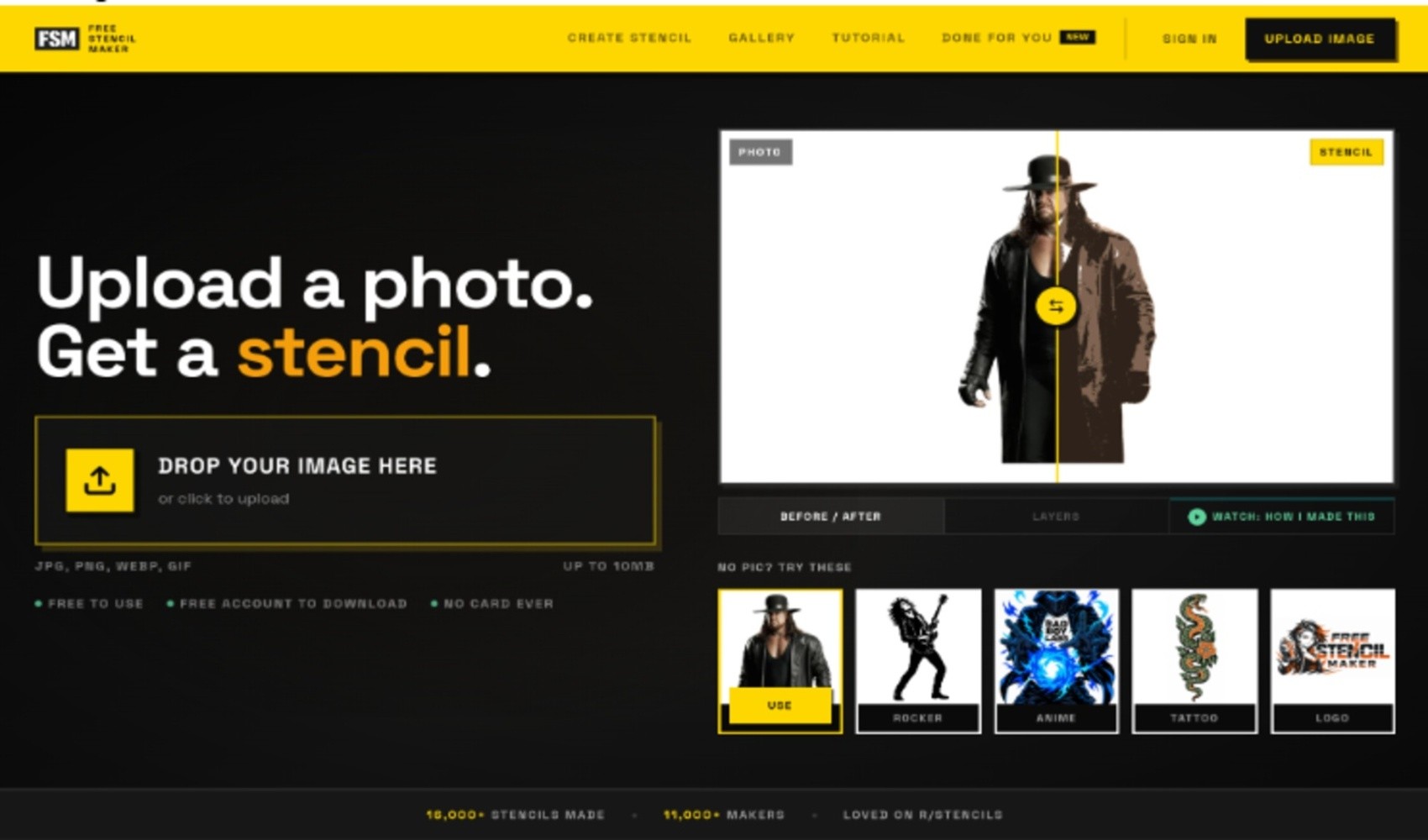
Airbrush work is layered — one frisket per tone — and this is the only tool here built that way. It takes JPG, PNG, WebP or GIF up to 10 MB, offers threshold, brightness and contrast, hatch, dot and crosshatch fills, text layers, and a bridging tool that highlights every island that would fall out so you can move the gap to its own touch-up layer. Free accounts export unlimited PNG and PDF; SVG, DXF and Cricut export sit behind Pro at $10/month, $90/year or $249 lifetime. The site flags known issues in Safari.Screenshot: freestencilmaker.com, September 2026
For tattoo: MakeLine
Art Tattoo Stencil Maker
Adaptive thresholding, an intensity slider (low for bold traditional, high for fine-line), a line-weight control, and a mirror-flip toggle for thermal transfer paper. Input is JPG, PNG, WebP or HEIC up to 10 MB; output is a high-resolution PNG on white, no watermark, no sign-up, and conversions run in the browser. Two caveats: no size field, so you scale in the print dialog; and the site's own note that being able to convert an image does not mean you have the right to tattoo it. Finalize with the artist — placement, stretch and flow over a curved body are their call, not the software's.
For pumpkin: Make
LineArt's pumpkin tool and Pixa
MakeLineArt's pumpkin generator outputs three levels — cut through, scrape thin, leave intact — a smarter answer than bridges, since scraped zones glow without removing structure. It suggests 12 inches or more for detailed portraits, 8 to 10 for simple designs. Pixa goes the other way: you describe the stencil in words and it generates one. No photo, no control beyond the prompt.
For anything you have to enlarge: Rapid Resizer
Its point is scale. Set inches, feet, centimeters or percent and it tiles the design across sheets that line up — the one problem a print dialog cannot solve. Browser-based, phone or desktop. Its own picture stencil maker is not the sharpest tracer here, so the usual route is trace elsewhere, enlarge here.
Straight from a photo, no settings: Overchat AI Stencil Maker
The https://overchat.ai/ai-tools/stencil-maker does not export vectors and gives you no threshold slider — the page says the AI traces with bridges and no sliders to fiddle with, and its FAQ sends you to Cricut Design Space's Trace tool or Inkscape's Trace Bitmap before cutting. One upload, three styles: Line art for a single-weight outline, Detailed to keep interior shading, Spray for bold connected shapes with maximum contrast. Input is JPG, PNG, WebP or HEIC up to 20 MB; output is a PNG on white. Busy scenes produce busy stencils, as the FAQ admits.
Screenshot: overchat.ai/ai-tools/stencil-maker, September 2026
Nine tools in, the app behind the last one deserves a line. Overchat AI is an all-in-one app bundling 150+ purpose-built tools across image, video, audio and text, running models from GPT, Claude, Gemini, Grok, Kimi and Qwen on web, iOS and Android, with 350,000+ users. Pro is priced at $59.99 for twelve months, against $14.99 charged monthly. Stack ChatGPT Plus at $20, Claude Pro at $20 and Google AI Pro at $19.99 and one month is about $59.99 — the same money buys a year here.
Picking one
Match the tool to the constraint, not to the preview. Machine-cut vinyl means a vector export. Airbrush means separations. A tattoo means clean line art, a mirror flip and a conversation with the artist. A pumpkin means depth levels or bridges, and a print sized to the fruit. All nine hand you a black-and-white image in under a minute. Only some hand you something cuttable.

18 SEP 2026 · Federico De Caroli, who records as Deca, has spent forty years refusing to choose between experiment and form. His new album takes on the machine age.
SAVONA, Italy — In June 2025, https://www.getfeature.io/articles/federico-de-caroli released an album called Neuronte, a word he made himself. It joins the Greek neuron, nerve, to the participle ending -onte, and it names a condition: a being is a neuronte when it undergoes sensory experience without physical contact with the material world, feeling bodily sensation without using the senses. Anyone asleep and dreaming is temporarily in that state.
Seven tracks, roughly forty minutes, built around what he has described as an interest in robotics, alchemy, telepathy and dream. It arrived as he passed the four-decade mark in a career that has never quite fit the categories available to it.
De Caroli was born in Savona in 1964 and started piano at eleven. He registered as a composer with SIAE, the Italian authors' society, in 1983, bought a Roland JX-3P, and three years later put out Alkaid under the name Deca. More than twenty albums followed, moving through cosmic synthesiser music, industrial, dark ambient and, more recently, solo piano.
Those first records have since become collectors' items. Synthetic Lips, pressed in 1987 in an edition of roughly 100 copies and reissued in 2016, and the 1986 debut Alkaid have both changed hands second-hand at median prices above $200. On Discogs, about eight times as many collectors list each record as wanted as own a copy.
His work has also reached wide audiences. He has written for RAI, Italy's national broadcaster, and for theatre, ballet, video art and multimedia projects. His catalogue is published by Sonor Music Editions in Rome and licensed internationally through APM Music, and his pieces turn up regularly in documentaries.
The recognition, when it came, came from an unlikely quarter. The critic Piero Scaruffi, not a man given to generosity, placed Deca's 2002 album Simbionte at number 43 on his list of the best ambient records ever made. The Treccani encyclopaedia, Italy's most established reference work, carries an entry on him.
None of which has made him an easy fit among his peers.
“In experimental and avant-garde circles I have often been criticised for my formal consistency and underlying musicality,” De Caroli said. “I have looked for a constant compromise between exploration and style, one that avoids gratuitous provocation in favour of works with a coherent sense of purpose.”
That is a real disagreement, not a modest one. Much of European experimental music since the 1970s has treated melody and structure as compromises to be escaped. De Caroli kept them, and took the criticism.
He has also built a framework around the idea. In February 1992 he published the manifesto of Distonirismo, a contraction of distorsione onirica, dream distortion, which holds that dreaming is not a supplement to waking perception but a level of consciousness with equal standing. He arrived at it without leaning on Freud, Jung or the Surrealists, and it has organised his output ever since, across music, painting and fiction.
He holds a degree in literature, has published novels, exhibited paintings on alchemical themes, and once ran the eighteenth-century Teatro Sacco in his home city.
Neuronte came out on Atom Institute and drew a favourable notice from the Italian music site OndaRock, whose reviewer described a turn away from industrial texture toward something colder and more cosmic, with Vangelis and John Carpenter audible in the background. Sissi Kia, a longtime artistic collaborator who has lent her speaking voice to earlier records and works with him on photography and video, appears again. Every one of the seven tracks has its own film, shot in black and white or with the colour pushed toward sepia and blue.
For a composer who has spent forty years insisting that experiment and coherence are not opposites, an album about the boundary between people and machines is a reasonable place to be standing.

17 SEP 2026 · Workplace gifting in Singapore rarely follows one set of rules across every situation. A farewell gift for a manager calls for more formality than one for a peer, since the relationship carries a different weight and the gift is often meant to reflect that. Flower arrangements remain one of the safest general-purpose choices for office settings, since they carry none of the dietary complications food-based gifts do. A fruit basket works well when the gesture needs to feel practical and shareable rather than decorative, particularly for a get-well or wellness-focused occasion. Christmas flower arrangements bring the same logic into festive office decor, where a display needs to hold up over weeks of foot traffic rather than a single sitting. None of these four situations call for the same gift, and treating them interchangeably is usually where workplace gifting goes slightly wrong. Working out which category a specific situation falls into first tends to narrow the decision faster than browsing a general catalogue from scratch.
What Makes a Farewell Gift for a Manager Different From One for a Peer?
A farewell gift for a manager typically carries more formality than one for a peer, since the relationship is hierarchical rather than lateral, and the gift is often organised by a team rather than one individual. Getting the tone right matters more here than the price paid, since an overly casual gesture can read as dismissive of the working relationship regardless of how well it's intended.
Singapore's job market has actually been slowing rather than accelerating. The Ministry of Manpower reported the average monthly resignation rate fell to a historical low of 1.0% in the first quarter of 2026, down from 1.3% the quarter before. Fewer people changing jobs doesn't mean fewer senior departures worth marking properly, and a manager's exit in a slower market often reflects a more considered decision than a routine move would, which arguably raises the bar for how the send-off itself is handled.
When a team pools together for this kind of gift, the order typically goes through the samehttps://joaquimflorist.com/pages/corporate-gifting-serviceshttps://joaquimflorist.com/pages/corporate-gifting-services process used for other bulk workplace occasions, covering consistent presentation and delivery to one office address rather than several individual purchases. This also avoids a common awkward outcome: several team members independently deciding to mark the same departure, resulting in the manager receiving several smaller, overlapping gifts rather than one considered gesture from the group.
Why Do Flower Arrangements Remain a Safe Choice for Office Gifting?
Flower arrangements suit office gifting because they carry no dietary or cultural complications, unlike food-based gifts, which makes them appropriate across almost any relationship or seniority level without additional research. That's part of why they remain a default choice even in a country as culturally mixed as Singapore, where a food-based gift often needs a moment's thought about dietary restrictions before it's sent.
Ahttps://joaquimflorist.com/collections/table-arrangementhttps://joaquimflorist.com/collections/table-arrangement intended for a shared office space is usually built differently from one meant for a single desk or a home setting. It needs to hold up over several days of foot traffic and varying air conditioning rather than a single evening's display, which affects both the choice of flowers and how the arrangement itself is structured. Sturdier blooms and a more compact, stable base tend to outlast delicate stems in this kind of setting, even when the delicate option looks more impressive on the day it arrives.
When Does a Fruit Basket Make More Sense Than Flowers?
A fruit basket makes more sense than flowers when the gesture needs to feel practical and shareable rather than purely decorative, particularly for a get-well occasion, a wellness-focused gift, or an office setting where several people might reasonably help themselves. A shared basket left in a pantry area also tends to get noticed and used more consistently than a single arrangement sitting on one person's desk.
Ahttps://joaquimflorist.com/collections/gift-hamperhttps://joaquimflorist.com/collections/gift-hamper also avoids one limitation flowers carry in certain settings: some workplaces, and particularly hospital wards, restrict flowers for hygiene reasons regardless of the occasion, whereas a sealed or individually wrapped fruit basket rarely runs into the same restriction. Checking this in advance, rather than assuming flowers are always welcome, avoids a wasted gesture in exactly the settings where thoughtfulness matters most. This is worth remembering for a colleague recovering in hospital specifically, where a beautiful bouquet can end up turned away at the door despite the good intention behind it.
How Do Christmas Flower Arrangements Fit Into Office Gifting Season?
Christmas flower arrangements extend the same office-appropriate logic into the festive period, where a well-placed display in a reception area or client-facing space does more visual work than several smaller decorations scattered around. One considered arrangement tends to read as more deliberate than a handful of generic festive touches added piecemeal, and it also reduces the ongoing effort needed to keep a space looking festive throughout December.
https://joaquimflorist.com/collections/christmas for offices are generally chosen for durability across the full festive period rather than a single event, since they need to remain presentable through weeks of client visits and everyday foot traffic rather than one gathering. Timing also matters more during this season than most others, since festive stock across the wider florist industry tends to run down in the final week before Christmas, well before the date itself. Ordering with a reasonable buffer, rather than waiting until the office is already in full festive mode, tends to leave more options available at the point of ordering.
Matching the Gift to the Relationship and the Setting
Across all four situations, the same underlying question applies: who is this for, and where will it actually sit once it's given? A farewell gift for a manager needs to reflect seniority and often scale to a group contribution. A flower arrangement needs to suit a shared space rather than a single desk. A fruit basket needs to work somewhere flowers might not be practical, such as a hospital ward. A Christmas arrangement needs to last the full festive season rather than one occasion. None of these decisions require special expertise, but each one has a different answer depending on the relationship and the room the gift will actually occupy, which is worth working out before browsing a catalogue rather than after placing an order that technically fits the occasion but misses the specific setting it's meant for.
19 AUG 2026 · A comparative look at logo design tools built for marketers and small teams who need a usable brand mark without a background in graphic design.
Introduction
A logo is often the first visual cue a customer connects to a business. For marketers, it also functions as a reusable asset that shows up on social profiles, ad units, email headers, and landing pages. That mix of demands has pushed logo creation out of specialist software and into browser-based tools that most people can operate on day one.
Comparing the Top Logo Makers of 2026
The tools below are grouped by the type of user each one tends to suit. Adobe Express appears first because its combination of ease of use, broad applicability, and a balanced feature set covers the widest slice of typical marketing needs. The tools that follow are strong within narrower scenarios and are framed as alternatives for those specific cases.
Best Logo Design Maker for Everyday Marketing ContentAdobe Express
Suited to marketers who want a logo and then need to reuse it across other content without switching tools.
Overview.
Adobe Express is a browser and mobile app for creating logos, social posts, flyers, short videos, and PDFs. Its logo flow starts with a business name, an industry, and a style direction, then produces a set of concepts to refine. Icons, colors, and fonts can be swapped inside a simplified editor, and the tool can also apply animation to a finished mark. Thehttps://www.adobe.com/express/create/logo from Adobe Express has an option to move into a paid tier for advanced assets and features.
Platforms supported. Web, iOS, and Android.
Pricing model. Free to create and download, with a premium subscription that unlocks additional fonts, templates, and generative features.
Best Logo Design Maker for a Website-First Workflow
Wix Logo Maker
Suited to users who are already building, or plan to build, a site on Wix.
Overview. Wix Logo Maker uses a short questionnaire about brand name, audience, and style to produce a design, which can then be edited or used as generated. The logos are set up to flow into the Wix website builder.
Platforms supported. Web, with mobile access through Wix.
Pricing model. Free to design, with paid packages required to download the files.
Tool type. Questionnaire-driven logo maker tied to a website platform.
Strengths.
- A guided chat flow that turns simple answers into a starting design.
- Logos optimized for site use, which integrate cleanly into a Wix site.
- Template options for users who prefer to start from an existing layout.
Limitations.
- The tool is most useful for people committed to the Wix ecosystem.
- Downloading finished files requires a paid package.
Wix Logo Maker fits users whose logo and website live in the same place. When the plan is to publish on Wix, the connection between the mark and the site removes a handoff step.The questionnaire approach lowers the starting effort, since the tool proposes a direction before any manual editing. Users outside the Wix platform gain less from that integration.
Compared with a general content app, Wix concentrates on the site-to-logo relationship rather than a wide spread of marketing formats.
Best Companion to a Logo Design Maker for Putting a New Brand Mark to Work
Buffer
Suited to marketers who have a finished logo and need to publish and track it consistently across social channels.
Overview.
https://buffer.com/ is a social media management and analytics tool. It schedules posts across multiple platforms, keeps profile branding consistent, and reports on how content performs. It does not create logos; it helps a completed mark and its surrounding content reach an audience on a schedule.
Platforms supported. Web, iOS, and Android.
Pricing model. Free plan for basic scheduling, with paid tiers that add channels, analytics, and team features.Tool type. Social media scheduling and analytics platform.
Frequently Asked Questions
Which logo design tools let non-designers add icons and animations?
Several tools in this category support both without any design background. Adobe Express offers a broad icon selection inside its logo flow and can apply animation styles to a finished mark, exporting the result as an MP4. Canva and Looka also include icon libraries and template-based customization, though animation support and export options vary by tool and tier. The common thread is a guided editor that handles icon placement and motion through menus rather than manual vector work, so a person can add these elements by selecting options instead of drawing them.
Can a logo be animated for use on social media or a website?
Yes. Animated logos are a recognized use case, and tools such as Adobe Express provide a set of motion styles that apply to text or graphics within the mark. The animated file is typically exported as a video format that suits social clips, video intros, and website headers. Animation tends to work best as a short, subtle effect rather than a heavy sequence, since the goal is to draw attention to the brand rather than distract from it. Support and file formats differ between tools, so the available motion options depend on the platform in use.
Are the icons in these tools free to use for commercial purposes?
Most logo makers include icon libraries intended for commercial use, but the specifics depend on the tool and the plan. Some icons are free on every tier, while others sit behind a premium subscription. Because many platforms rely on non-exclusive icons and templates, the same graphic may appear in other logos, which can affect how distinctive a mark feels and, in some cases, its eligibility for trademark protection. Reviewing each tool's licensing terms before finalizing a logo is a sensible step, especially for a business that expects to rely heavily on the mark.
Do non-designers need any prior experience with design software to use these tools?
No prior experience is generally required. The tools in this category are built around guided flows, questionnaires, or drag-and-drop editors that avoid concepts such as layers, paths, and anchor points. A typical process starts with a business name and a few style choices, then produces concepts to refine through simple menus. This design is intentional, since the audience is largely marketers, founders, and small teams rather than trained designers. The learning curve is modest, and most users can produce a usable logo in a single sitting.
What file formats support animated logos, and where can they be used?
Animated logos are usually exported as video files, most commonly MP4, which play across social platforms, video intros, and website elements. Static versions of the same logo are typically available as PNG or JPG, and some tools also provide vector formats such as SVG or EPS on paid tiers for print and large-format use. The right format depends on the destination: a video file suits motion contexts, a transparent PNG suits digital overlays, and a vector file suits scaling without quality loss. Checking which formats a tool includes on a given plan helps match the output to where the logo will actually appear.

12 AUG 2026 · If you've spent any time researching an East Africa trip, you've probably noticed something: nobody agrees on which country is "best." Ask five travel forums and you'll get five different answers, and honestly, they're all a little bit right. That's because Kenya, Rwanda, Tanzania and Uganda aren't really competing versions of the same trip — they're four genuinely different experiences that happen to share a continent
https://kenyasafaristours.com/ is where most people picture the classic scene — open plains, a jeep full of cameras, lions lounging under an acacia tree. Tanzania Safari Tours lean into scale, with the Serengeti and Ngorongoro delivering some of the densest wildlife viewing on Earth. Rwanda safari Africa is a different animal altogether (pun intended) — it's built around Gorilla Trekking in Rwanda and a shorter, more polished style of travel.
Kenya vs Rwanda vs Tanzania vs Uganda at a Glance
Before getting into the details, it is helpful to have a quick overview of what each destination is best known for. Kenya is particularly famous for the Maasai Mara and classic safari experiences. It does not offer gorilla trekking, but it provides excellent opportunities to see the Big Five through traditional game drives. A typical Kenya safari lasts around 5–10 days, with options ranging from moderate to luxury travel. It is especially well suited for first-time safari travelers.
Rwanda is best known for its gorilla trekking experiences. Unlike Kenya and Tanzania, Rwanda offers the opportunity to see mountain gorillas in their natural habitat. Its Big Five experience is more limited, while its main safari style combines gorilla trekking with a compact safari experience. Trips generally last around 3–7+ days, and the country is often considered a mid-luxury to premium destination. Rwanda is particularly suitable for travelers whose main goal is gorilla trekking.
Tanzania is renowned for iconic destinations such as the Serengeti and Ngorongoro Crater. Although it does not offer gorilla trekking, it provides excellent Big Five viewing and is strongly focused on wildlife experiences. Typical trips last around 5–12 days, with moderate to luxury options available. Tanzania is an excellent choice for serious wildlife viewers who want an immersive safari experience.
Uganda stands out for its combination of gorilla trekking and varied wildlife experiences. It offers good Big Five viewing and a multi-experience safari style that can include gorillas, wildlife, and other activities. Trips commonly last 5–12 days, and Uganda is often considered a strong-value option compared with some of the other destinations. It is best suited for travelers looking for variety and diverse experiences.
None of these countries is objectively "the winner." It really comes down to what you're chasing — a first Big Five safari, a bucket-list gorilla encounter, or something that mixes both.
Kenya Safari Africa — Best for Classic Wildlife & the Maasai Mara
What Makes Kenya Different?
When people picture an "African safari," they're usually picturing Kenya, whether they know it or not. The Maasai Mara is the headline act — rolling grassland, huge cat populations, and (seasonally) front-row seats to the Great Migration as wildebeest and zebra cross the Mara River. Amboseli offers something different again: enormous elephant herds wandering beneath Kilimanjaro, which honestly never gets old no matter how many photos you've seen of it. Tsavo, less crowded, rewards travelers who want space and red-dust landscapes without quite as many other vehicles around.
Kenya also does classic open-vehicle game drives better than almost anywhere, and there's real depth to the cultural side too — Maasai village visits are common, though quality varies a lot depending on the operator. Accommodation ranges from basic tented camps to genuinely five-star lodges, so there's flexibility for pretty much any budget.
Kenya Safari Cost
The cost of a Kenya safari depends largely on the type of experience you choose. Budget or group safaris generally cost around $150–$300 per person per day, making them a more affordable option for travelers on a tighter budget. Mid-range safaris typically cost around $300–$500 per person per day, offering a balance between comfort and price.
For travelers seeking a more premium experience, luxury safaris can cost approximately $600–$1,200 or more per person per day, depending on the accommodation and services included. As a general estimate, a 5-day mid-range safari may cost around $1,500–$2,500 per person, while a 7-day mid-range safari can range from approximately $2,100–$3,500 per person.
These numbers move around a lot depending on season, park fees, whether you're in a private or shared vehicle, and how close your lodge sits to the Mara itself. Staying just outside the reserve gate versus a short flight away can shift the price noticeably.
Who Should Choose Kenya?
Kenya tends to suit first-time safari travelers, Big Five enthusiasts, and photographers who want that classic golden-grass, big-cat imagery. If the Maasai Mara has been on your list for years, this is probably your country.
Tanzania Safari Tours — Best for Scale, Serengeti & Ngorongoro
Why Tanzania Stands OutTanzania plays a bigger game, literally. The Serengeti is vast — much larger than the Mara — and Ngorongoro Crater packs an almost unreasonable concentration of wildlife into one collapsed volcanic caldera. Add Tarangire's elephant herds and baobab trees, plus Lake Manyara's tree-climbing lions and flamingos, and you get a country built for longer, more layered safari circuits.
https://www.tanzaniasafaristours.com/ often involve more driving time between parks, especially if you're covering the full northern circuit, so itineraries here tend to run a little longer than Kenya's. There's also a real split between northern Tanzania (Serengeti, Ngorongoro) and the quieter, less-visited southern circuit around Ruaha and Selous, which appeals to travelers who've already done a safari and want fewer other vehicles around.
Why Rwanda Is Different From a Traditional Safari
Here's the thing worth saying upfront: Rwanda isn't primarily a Big Five destination, and it's not trying to be. The country is built around Volcanoes National Park, home to mountain gorillas and golden monkeys, with Akagera National Park offering a smaller-scale but genuine savannah safari on the side if you want it. Kigali, Rwanda's capital, is also unusually clean and easy to navigate for an African capital city, and distances between destinations are short compared to Kenya or Tanzania.
https://www.gorillasafarirwanda.net/ has really built its reputation on convenience and polish — good roads, efficient logistics, high-end lodges near Volcanoes National Park that rival anything you'd find elsewhere on the continent.
What Makes Uganda Special?
https://www.gorillatrekking-uganda.com/ is the country that refuses to pick just one thing. Bwindi Impenetrable National Park is the other major gorilla trekking destination alongside Rwanda. Queen Elizabeth National Park is famous for its tree-climbing lions and boat safaris along the Kazinga Channel. Murchison Falls delivers dramatic scenery and strong Big Five viewing, while Kibale Forest is arguably the best chimpanzee tracking spot in the region.
Uganda Safari Package Cost
A https://www.primeugandasafaris.com/ can climb quickly once gorilla trekking, private transport, premium lodges, or domestic flights between parks get added in — but even with those extras, it tends to undercut Rwanda while covering more ground.
Best Time to Visit Kenya, Rwanda, Tanzania & Uganda
Dry seasons generally mean easier wildlife viewing across Kenya and Tanzania, since animals cluster around remaining water sources and the grass is shorter. Wet seasons bring lush scenery and fewer crowds, but muddier roads and denser vegetation that can make spotting animals harder. If the Great Migration river crossings are on your list, timing matters a lot — miss the window by a few weeks and you'll see plenty of wildlife, just not that specific spectacle.
Gorilla trekking runs on a slightly different calendar. Rwanda and Uganda can be trekked year-round, though the drier months make the forest hiking noticeably less muddy and, frankly, more comfortable. Here's the important bit that a lot of people miss: the best time for Kenya or Tanzania wildlife viewing isn't necessarily the best time for https://www.wildgorillasafaris.com/ or Uganda. These are separate ecosystems with separate seasons, so plan around the specific park and activity rather than treating "East Africa" as one climate zone with one perfect month.
Final Thoughts: Pick the Experience, Then Pick the Country
Kenya delivers the classic safari. Tanzania brings scale, with the Serengeti and Ngorongoro doing the heavy lifting. Rwanda offers a premium, gorilla-focused trip that doesn't demand a lot of your time. And Uganda ties gorillas, chimpanzees, and traditional safari together into one varied itinerary.
There's n

29 JUL 2026 · Introduction
The https://highcampadventure.com/trip/everest-base-camp-trek is one of the most celebrated trekking adventures in the world, offering an unforgettable journey through Nepal’s breathtaking Khumbu region. Every year, thousands of trekkers travel to the Himalayas to experience the thrill of reaching the base of Mount Everest (8,848.86 meters), the highest mountain on Earth. The trek combines spectacular mountain scenery, authentic Sherpa culture, ancient Buddhist monasteries, and the personal achievement of completing one of the world's most famous hiking routes.
Unlike mountaineering expeditions that require technical climbing skills, the Everest Base Camp Trek is designed for trekkers with good physical fitness and determination. Along the trail, visitors discover glacier-fed rivers, suspension bridges, alpine forests, remote mountain villages, and panoramic viewpoints that reveal the grandeur of the Himalayan range. It is an adventure that offers far more than reaching a destination—it is a journey filled with unforgettable experiences.
Beginning the Adventure
The Everest Base Camp Trek begins with a scenic flight from Kathmandu to Lukla, a small mountain airstrip surrounded by towering peaks. From Lukla, the trail follows the Dudh Koshi River, crossing suspension bridges decorated with colorful prayer flags and passing through picturesque Sherpa settlements.
One of the first major destinations is Namche Bazaar, the cultural and commercial heart of the Everest region. This lively mountain town serves as an essential acclimatization stop, giving trekkers time to adjust to the altitude while enjoying local cafés, markets, museums, and stunning viewpoints overlooking Everest and neighboring peaks.
As the journey continues, the landscape gradually transforms from forests of pine and rhododendron into rocky alpine terrain, glaciers, and snow-covered mountains.
Reaching Everest Base Camp
The highlight of the trek is reaching Everest Base Camp, situated at an altitude of approximately 5,364 meters (17,598 feet). Standing at the foot of the world's tallest mountain is an unforgettable achievement that attracts adventure lovers from every corner of the globe.During the spring climbing season, the base camp becomes a vibrant community of colorful expedition tents where mountaineers prepare for their summit attempts. Outside the climbing season, the area remains peaceful, allowing trekkers to fully appreciate the surrounding glaciers and dramatic Himalayan scenery.
Although Mount Everest itself is best viewed from nearby viewpoints, arriving at Base Camp remains an emotional milestone that symbolizes determination and perseverance.
Kala Patthar: The Ultimate Everest Viewpoint
No Everest Base Camp Trek is complete without hiking to Kala Patthar, located at approximately 5,545 meters (18,192 feet). This famous viewpoint offers the closest and most spectacular panoramic views of Mount Everest.
The early morning ascent rewards trekkers with an unforgettable sunrise as golden light illuminates Everest, Lhotse, Nuptse, Pumori, and countless surrounding peaks. The breathtaking scenery makes Kala Patthar one of the most photographed locations in Nepal and a highlight for nearly every visitor.
The panoramic views from Kala Patthar often become the defining memory of the entire trek.
Sherpa Culture and Himalayan Traditions
The Everest Base Camp Trek provides a unique opportunity to experience the rich traditions of the Sherpa people, whose history and culture are deeply connected to the Himalayas.
Trekkers pass through villages featuring traditional stone houses, Buddhist stupas, prayer wheels, mani walls, and colorful prayer flags. One of the journey's most important cultural landmarks is Tengboche Monastery, the largest Buddhist monastery in the Khumbu region.
Visitors can witness Buddhist ceremonies, learn about local customs, and enjoy genuine Sherpa hospitality while staying in family-operated teahouses. These cultural experiences create a deeper connection to the region beyond its incredible mountain scenery.
Spectacular Nature and Wildlife
The trail passes through Sagarmatha National Park, a UNESCO World Heritage Site renowned for its exceptional biodiversity and stunning mountain landscapes.
Lower elevations are covered with forests of pine, fir, birch, and rhododendron, while higher altitudes feature alpine meadows, glaciers, and rugged mountain terrain. Wildlife commonly found in the park includes Himalayan tahr, musk deer, Himalayan monal, snow pigeons, and various high-altitude bird species. Lucky visitors may even spot the elusive snow leopard in remote areas.
Every section of the trail presents new scenery, making the trek one of the most visually rewarding adventures in the Himalayas.
Trek Difficulty and Preparation
The Everest Base Camp Trek is considered moderately challenging because of its high altitude and long trekking days rather than technical climbing. Most itineraries last between 12 and 14 days, allowing sufficient time for acclimatization.
Trekkers usually walk five to seven hours each day across varied terrain. Proper physical preparation, including cardiovascular training and regular hiking, helps make the journey more enjoyable.
Essential trekking equipment includes sturdy waterproof boots, warm layered clothing, an insulated jacket, gloves, trekking poles, sunglasses, sunscreen, and a high-quality sleeping bag. Maintaining hydration and following a gradual ascent schedule are crucial for reducing the risk of altitude sickness.
Best Time to Visit
The ideal seasons for the Everest Base Camp Trek are spring (March to May) and autumn (September to November).
Spring offers blooming rhododendron forests, pleasant temperatures, and excellent mountain visibility. Autumn is equally popular because of its stable weather, clear skies, and crisp panoramic views.
Winter trekking is possible for experienced adventurers prepared for extremely cold temperatures and snowfall, while the summer monsoon season is generally avoided due to rain, clouds, and slippery trails.
Why Choose the Everest Base Camp Trek?
The Everest Base Camp Trek is a perfect choice for travelers who want to experience the beauty of the Himalayas without technical mountaineering. It combines world-famous mountain scenery, authentic Sherpa culture, ancient monasteries, and a rewarding sense of accomplishment.
The trek also provides opportunities to witness Mount Everest from multiple viewpoints while exploring one of Nepal's most scenic and culturally significant regions. Every day offers a new adventure, making the journey unforgettable from start to finish.
Conclusion
The https://highcampadventure.com/trip/everest-base-camp-trek is one of the world's greatest trekking adventures, offering an incredible blend of natural beauty, cultural richness, and personal achievement. From the lively streets of Namche Bazaar to the peaceful trails leading to Everest Base Camp and the breathtaking sunrise at Kala Patthar, every moment of the journey is unforgettable.
For travelers seeking an authentic Himalayan experience filled with spectacular scenery and meaningful cultural encounters, the Everest Base Camp Trek remains an inspiring destination that delivers memories to last a lifetime.
Key Takeaways
- Everest Base Camp Trek is one of the most iconic trekking adventures in the world.
- The trek reaches Everest Base Camp at 5,364 meters (17,598 feet).
- Kala Patthar offers the best panoramic views of Mount Everest.
- The trail passes through Namche Bazaar, Tengboche Monastery, and traditional Sherpa villages.
- Sagarmatha National Park showcases diverse wildlife and breathtaking Himalayan landscapes.
- Spring and autumn provide the best trekking conditions.
- Proper acclimatization, physical fitness, and quality trekking gear are essential for a successful journey.
Final Thoughts
The Everest Base Camp Trek is more than a hike—it is a remarkable journey into the heart of the Himalayas. Towering peaks, ancient traditions, welcoming Sherpa communities, and unforgettable landscapes combine to create one of the world's most extraordinary adventures. Whether your goal is to stand beneath Mount Everest, experience Nepal's mountain culture, or challenge yourself in one of the most beautiful places on Earth, the Everest Base Camp Trek promises an experience that will stay with you forever.

23 JUL 2026 · Crypto in 2026 is becoming harder to describe as a single speculative market. Regulation is drawing sharper boundaries between different types of assets, stablecoins are developing into a financial category of their own, tokenization is bringing traditional securities onto programmable infrastructure, and institutional participation is increasing the importance of custody, liquidity, and compliance. As these changes connect digital assets more closely with wider developments in technology and financial infrastructure, readers can also follow broader innovation coverage through https://www.directionsmag.com/ while comparing market narratives with regulatory documents, network activity, and independent data.
The shift is significant because previous crypto cycles were largely interpreted through prices. When major assets rose, attention moved toward smaller tokens. When liquidity disappeared, activity declined across much of the market. In 2026, that relationship is becoming less straightforward. A payments platform can expand while speculative tokens fall. Tokenization can attract financial institutions without producing an immediate rally across the broader market. Stablecoins can grow because users want access to a digital dollar rather than exposure to crypto volatility.
Regulation is developing at the same time. In March 2026, the U.S. Securities and Exchange Commission issued an interpretation explaining how federal securities laws apply to several categories of crypto assets and activities, including digital commodities, digital tools, stablecoins, digital securities, staking, mining, airdrops, and wrapping. In Europe, the European Commission opened a review of the Markets in Crypto-Assets Regulation in May 2026 to assess whether MiCA remains fit for purpose following its initial implementation and subsequent market developments.
These changes suggest that the next stage of the market may reward a different type of participant. Access to liquidity, professional custody, regulatory permissions, reliable settlement, and strong security could become more valuable than simply being early to a new token.
The defining question for crypto in 2026 may not be which asset generates the largest short-term return, but which parts of the market can remain useful when speculative demand disappears.
Several forces are shaping that transition.
Regulation Could Redraw the Competitive Map
Regulation has moved from being a background risk to becoming one of the primary forces determining how the crypto industry develops.
For much of the sector’s history, businesses operated in an environment where the legal treatment of many assets and activities was uncertain. Exchanges, developers, issuers, custodians, and investors often had to interpret rules designed before blockchain networks existed.
That uncertainty created flexibility, but it also created risk.
A service could operate for years before regulators determined that its activities fell under a particular financial framework. Assets available to customers in one jurisdiction could be restricted in another. Institutional investors could find technically attractive opportunities but avoid them because the legal responsibilities were difficult to define.
The situation in 2026 is becoming more structured.
The SEC’s March interpretation introduced a taxonomy covering several categories of crypto assets and clarified the agency’s position on activities such as protocol staking, protocol mining, airdrops, and wrapped assets.
This matters because classification affects how products can be issued, traded, marketed, and held.
A practical digital tool may operate under a different legal framework from a tokenized security. A payment stablecoin may raise different regulatory questions from an investment product. A decentralized protocol may create responsibilities that differ from those of a centralized exchange.
The result could be a more segmented market.
Instead of discussing “crypto regulation” as one category, investors increasingly need to ask what type of asset or service they are evaluating.
The Market Could Split Into Distinct Categories
A useful framework is to distinguish between several broad areas:
- Native network assets used within decentralized systems.
- Stablecoins designed to track reference currencies or assets.
- Tokenized securities representing conventional financial instruments.
- Utility-oriented digital assets providing access, credentials, or other functionality.
- Centralized financial services offering trading, custody, or payments.
- Decentralized applications operating primarily through smart contracts.
Each category has different economics and different regulatory risks.That distinction could become increasingly important for investors.
A token may experience strong network activity but face limited access through regulated platforms.
Another asset may gain institutional distribution precisely because its legal status and custody arrangements are easier to understand.
This creates a new form of competitive advantage: regulatory accessibility.
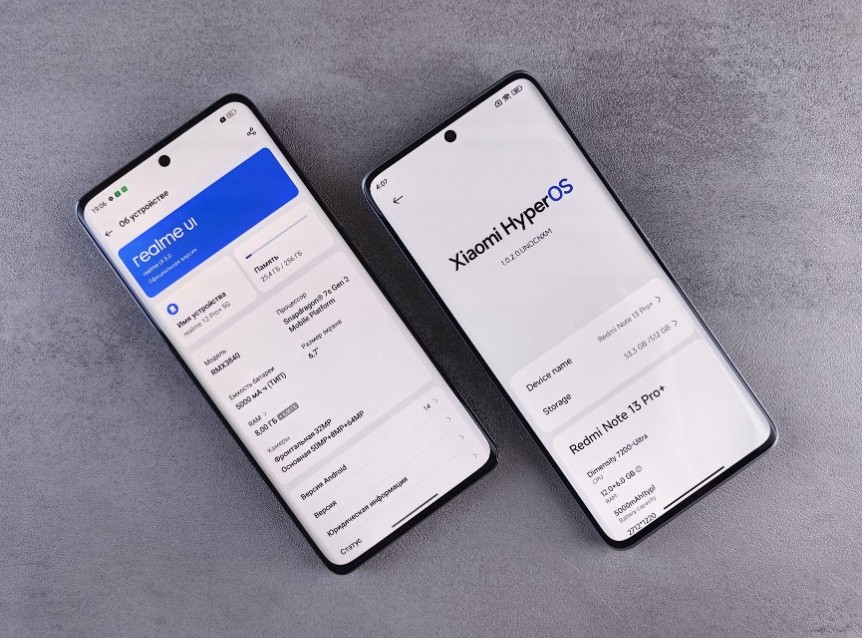
24 JUN 2026 · Comparison of two smartphones showing Realme UI and Xiaomi HyperOS interfaces on their screens.
Fixed data plans beat unlimited for most travelers in 2026. Light to moderate users on trips under 14 days pay 30 to 60 percent less with a fixed GB plan than a throttled unlimited plan. Unlimited only makes financial sense for heavy streamers on trips over 10 days where full-speed unlimited is available. Airalo leads on raw destination count for fixed plans, covering 190+ countries. HelloRoam delivers the best budget entry point at $1.03 per day with a 6-month data validity guarantee across 185 countries.
How Fixed Data eSIM Plans Work
A fixed data plan gives you a set amount of data: 3GB, 5GB, 10GB, 20GB, or similar tiers. You buy that bucket upfront. When you use it, it's gone. The speed stays full until you hit your limit.Most fixed plans include:
- Full network speeds (4G/LTE or 5G where available)
- A validity window (7 days, 30 days, or longer)
- No speed throttling until the data cap is reached
- Clear pricing with no surprises
The key advantage is predictability. You know exactly what you're getting for what you're paying.
Data Validity: The Hidden Value Driver
Some providers give you 7 days to use your data. Others give you 30 days. A few give you much longer.
HelloRoam offers a 6-month data validity guarantee on its fixed plans. That matters a lot for occasional travelers. If you buy a 5GB plan and only use 3GB during your trip, you keep the remaining 2GB for your next trip within six months. That's real money saved, not wasted allocation.Plans start at $1.03 on HelloRoam, covering 185+ countries. For budget travelers or people who don't stream much, those low-cost fixed plans often beat every unlimited option on the market.Airalo offers fixed plans across 190+ countries, the widest destination catalog of any retail eSIM provider. If you travel to obscure destinations in Africa, Central Asia, or the Pacific Islands, Airalo's catalog is the most likely to have a plan available.
How Unlimited eSIM Plans Work
Unlimited plans let you use data without a hard cutoff. But "unlimited" rarely means what people expect.The standard model works like this:
- You get a high-speed allowance (the "premium data" cap), often 1GB to 5GB
- After that cap, speed drops to 64Kbps to 512Kbps
- You stay connected but at speeds that make most apps frustrating
That reduced speed handles basic messaging. It does not handle Google Maps, video calls, or streaming.
Some unlimited plans offer genuinely full-speed data, but those sit in the premium price tier. Budget unlimited plans almost always throttle.
The Real Cost Math: 7-Day Trip
Let's look at two traveler profiles on a 7-day trip to Europe.
Light User: 300MB to 500MB per day
This traveler uses maps for an hour or two, checks email, sends messages on WhatsApp, and browses occasionally. No streaming, no video calls. A light user gets everything they need from a 3GB fixed plan. Paying for unlimited is wasted money.
Heavy User: 1GB to 2GB per day
This traveler navigates constantly, takes video calls, uploads photos, and streams during downtime.Here, unlimited becomes more competitive. A 14GB trip on fixed data and a full-speed unlimited plan come close on price. The unlimited plan wins only if you actually hit those higher daily averages.
The Real Cost Math: 14-Day Trip
A two-week trip changes the math significantly.
Light User on a 14-Day Trip
Two smartphones showcased side-by-side against a vibrant yellow background.
Total estimated usage: 5GB
A 5GB or 10GB fixed plan covers this trip comfortably. With HelloRoam's 6-month validity guarantee, any leftover data from a 10GB plan carries forward. You're not throwing money away.An unlimited plan for 14 days runs $40 to $80 depending on the provider and region. That light user gets no benefit from the extra headroom.
Hidden Costs of Unlimited Plans
Before choosing unlimited, check these details:
Premium data caps.
Nearly every "unlimited" plan has a fine-print cap after which speeds drop. A 1GB premium cap on a 10-day trip means you're throttled almost immediately.
Regional restrictions.
Many unlimited plans throttle in some countries while staying full-speed in others. A pan-European plan might work well in Germany but crawl in Croatia.
Top-up pricing.
Some providers let you buy extra premium data after the cap. Those add-on prices are often 3 to 5 times the cost of a fixed plan bought upfront.
Automatic renewals.
Some unlimited subscriptions auto-renew if you don't cancel before expiry. Check the terms.When you https://www.comparetravelesims.com across providers, read the full data cap and throttle policy, not just the headline price.
When Fixed Data Plans Win
Fixed plans make more sense when:
- You use under 1GB per day on average
- Your trip is short (3-10 days)
- You want clear, predictable billing
- You travel frequently and want leftover data to carry over
- You use apps mostly for maps, messaging, and light browsing
- You're buying plans for a destination with expensive data costs
When Unlimited Plans Win
Unlimited plans make more sense when:
- You stream video daily or take frequent video calls
- Your usage is unpredictable and you don't want to track it
- Your trip runs 10+ days with heavy daily use
- Full-speed unlimited is available at a competitive price
- You're traveling with someone who also needs heavy data and you can share
Data Validity: A Factor Most People Ignore
A 30-day plan at $30 sounds better than a 7-day plan at $20. But if your trip is six days, the 30-day plan only gives you three days more validity. You might use less than half the data.With HelloRoam's 6-month validity guarantee, you can buy a larger fixed plan, use what you need on this trip, and return to remaining data on your next trip. That changes the math for frequent travelers.
Compare this to providers with 7-day or 30-day windows. Leftover data expires and disappears.Airalo offers similar top-up flexibility on fixed plans, though validity windows are typically capped at 30 days per purchase rather than the 6-month rolling guarantee HelloRoam provides.
How to Pick the Right Plan for Your Trip
Follow these three steps before buying:
Step 1: Estimate your daily usage.
Light navigation and messaging runs about 300-500MB per day. Active use with maps, social media, and calls runs 1-2GB per day. Streaming adds 1-3GB on top.
Step 2: Multiply by your trip length.
Add a 20% buffer.
Step 3: Compare plan tiers, not just prices.
A 5GB fixed plan at $15 and a throttled unlimited at $25 are not equivalent products. Read the premium data cap on the unlimited option. Use a https://www.comparetravelesims.com tool to view the full plan details side by side before you decide.
FAQQ:
Is unlimited eSIM data actually unlimited?
Most unlimited eSIM plans throttle your speed after you hit a premium data cap. That cap is usually 1GB to 10GB depending on the plan. After the cap, speeds drop to between 64Kbps and 512Kbps. You stay connected, but performance suffers.
Q: What happens when I run out of data on a fixed plan?
Your connection stops and you need to buy a top-up or a new plan. Some providers notify you when you're close to your limit. HelloRoam's fixed plans let remaining data carry over for up to six months, so you top up on your next trip without losing what's left.
Q: Can I switch from fixed to unlimited mid-trip?
This depends on the provider. Some let you upgrade or add a plan that activates after your current one expires. Check the provider's policy before your trip if you think you might need to switch.
Q: How much data does Google Maps use?
Google Maps uses roughly 5-10MB per hour of active navigation. Downloading an offline map for a city typically uses 150-400MB. Pre-downloading maps over Wi-Fi before your trip cuts your data use abroad significantly.
Q: Are fixed data plans cheaper than unlimited?
For most travelers, yes. Fixed plans deliver a lower cost per usable gigabyte. The exception is heavy users on trips longer than 10 days, where full-speed unlimited plans can match the cost of stacking fixed top-ups.
Podcaster
Information
| Author | Sajid Seo |
| Organization | New One |
| Categories | Marketing |
| Website | - |
| sajidse.o4@gmail.com |

Copyright 2026 - Spreaker Inc. an iHeartMedia Company
