AI-generated content
Theological Foundations.
May 9, 2026 ·
12m 14s
Download and listen anywhere
Download your favorite episodes and enjoy them, wherever you are! Sign up or log in now to access offline listening.
Description
Theological Foundations. Ein Sof and the Concealed God. In Kabbalistic theology, Ein Sof ("without end" or "infinite") designates the transcendent and utterly unknowable essence of God, existing beyond all attributes,...
show more
Theological Foundations.
Ein Sof and the Concealed God.
In Kabbalistic theology, Ein Sof ("without end" or "infinite") designates the transcendent and utterly unknowable essence of God, existing beyond all attributes, limitations, or human comprehension. This concept represents the primordial divine reality prior to any manifestation or emanation, embodying absolute infinity that precludes definition or depiction. Kabbalists describe Ein Sof as both the fullness of all being and a form of "nothingness" (Ayin), surpassing finite categories while serving as the ultimate source from which creation emerges.
The Ein Sof constitutes the "concealed God," the hidden dimension of divinity deliberately withdrawn from direct perception to enable the existence of a finite world. This concealment addresses theological challenges such as divine hiddenness and the paradox of creation ex nihilo, positing that God's infinite light (Ohr Ein Sof) contracts (Tzimtzum) to create space for independent reality, yet remains omnipresent yet veiled. Unlike the revealed aspects of God manifest through the Sephirot, Ein Sof defies anthropomorphism or relational attributes, emphasizing God's radical otherness and the limits of mystical ascent.
Kabbalistic texts, such as those in the Zohar tradition, portray Ein Sof as the foundational stage of divine intent before differentiation into structured emanations, underscoring a dynamic process where the infinite potential actualizes through progressive concealment and revelation. This framework resolves apparent contradictions in monotheism by distinguishing the inaccessible divine core from accessible manifestations, influencing later developments like Lurianic Kabbalah's emphasis on restoration (Tikkun) from primordial withdrawal. While the term Ein Sof emerges explicitly in medieval Kabbalistic literature around the 13th century, its conceptual roots align with earlier Jewish philosophical notions of divine transcendence, adapted into esoteric symbolism.
Sephirot: Structure of Divine Emanation.
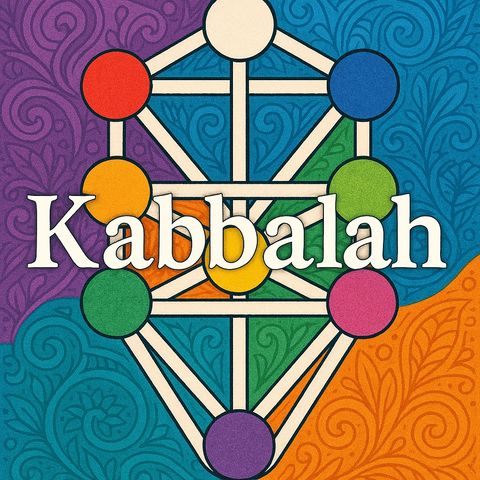
The sefirot, numbering ten in classical Kabbalistic doctrine, represent the primary channels or potencies through which the infinite divine essence, termed Ein Sof, manifests and sustains creation. These emanations form a structured hierarchy, often visualized as the Etz Chaim or Tree of Life, depicting a vertical arrangement from transcendent unity at the apex to immanent presence at the base. Unlike independent deities, the sefirot function as interconnected attributes of a singular divine reality, facilitating the flow of creative energy (shefa) downward in a process of progressive differentiation and revelation.
The uppermost sefirah, Keter (Crown), embodies primordial will and the initial point of contraction from infinity, serving as the supernal source beyond full comprehension. It connects to the intellectual triad: Chokhmah (Wisdom), the flash of intuitive potential; and Binah (Understanding), the expansive analysis that structures raw insight into form. Below lies the emotional realm, with Chesed (Loving-kindness) expanding mercy and Gevurah (Severity) imposing disciplined judgment, balanced by the central Tiferet (Beauty), which harmonizes opposites through compassion. The lower sefirot include Netzach (Eternity) for enduring initiative, Hod (Splendor) for receptive acknowledgment, Yesod (Foundation) as the synthesizing conduit, and Malkhut (Kingdom), the receptive sheath interfacing with the material world.
Interconnections among the sefirot occur via twenty-two pathways, corresponding to the letters of the Hebrew alphabet, enabling bidirectional influence and meditative ascent for the practitioner. In early Kabbalistic texts like the Zohar, these emanations are depicted as luminous spheres or vessels channeling divine light, with later Lurianic formulations in Etz Chaim emphasizing their dynamic rectification (tikkun) to restore cosmic wholeness. Empirical textual analysis reveals variations, such as occasional spherical imagery in medieval sources predating the linear Tree model, underscoring the sefirot's role not as static ontology but as a causal framework for divine immanence.
Partzufim and Anthropomorphic Configurations.
In Lurianic Kabbalah, partzufim represent reconfigured, anthropomorphic arrangements of the ten sefirot, transforming abstract divine emanations into structured, persona-like entities capable of dynamic interaction and rectification. These "faces" or "personas" (from Hebrew partzuf, meaning visage or configuration) emerged as a doctrinal innovation by Isaac Luria in the 16th century, systematically detailed in his disciple Chaim Vital's Etz Chaim (Tree of Life), composed around 1573. Unlike the static sefirotic tree of earlier Kabbalah, partzufim depict the sefirot as maturing through processes of expansion (igulim to yosher), enabling balanced influx of divine light (shefa) and preventing overload, as occurred in the primordial shattering (shevirat ha-kelim). This anthropomorphism serves as a metaphorical framework to convey non-literal divine processes, emphasizing relational dynamics over corporeal form, though critics like Yaakov Emden in the 18th century warned against misinterpreting it as physical.
The primary partzufim in the world of Atzilut (emanation) are hierarchically organized, each comprising subsets of sefirot analogous to human anatomy: the "head" (keter, chochma, bina), "torso" (the six midot: chesed to yesod), and "foundation" (malchut). At the apex sits Atik Yomin (Ancient of Days), encompassing the highest keter, symbolizing transcendent concealment. Below it is Arikh Anpin (Long Face or Macroprosopus), formed from chochma-bina-keter in expansive form, representing expansive mercy and the initial rectification post-shattering. The paternal Abba (Father) derives from chochma, and maternal Imma (Mother) from bina, together birthing the emotional core of Zeir Anpin (Small Face or Microprosopus), which integrates the six sefirot of chesed through yesod as a unified "son" figure undergoing incomplete development until tikkun. Nukva (Female) or Shechinah, counterpart to Zeir Anpin, embodies malchut in receiving mode, facilitating union (zivug) that sustains cosmic harmony. Secondary partzufim, such as Yaakov (from Zeir Anpin's right arm) or Yisrael (left arm), further delineate internal processes within these structures.
These configurations underpin Lurianic cosmology by modeling divine "contractions" (tzimtzum) and restorations, where partzufim interact erotically and hierarchically—higher ones enclothing lower—to channel light without rupture. Human prayer and mitzvot (kavvanot) mirror this, aligning personal partzufim (soul facets) with celestial ones to aid rectification, as Vital records Luria teaching that incomplete partzufim in Zeir Anpin reflect humanity's role in completing creation. While rooted in midrashic anthropomorphisms (e.g., Shiur Komah texts from late antiquity describing God's "body" measurements), Luria's system abstracts this into functional metaphysics, avoiding literalism; later Hasidic interpreters like the Baal Shem Tov (circa 1700–1760) internalized it psychologically, equating partzufim to soul states. Empirical verification remains interpretive, tied to meditative experiences reported by kabbalists, with no archaeological or textual precursors predating Luria's oral teachings around 1570 in Safed.
Cosmological Processes: Tzimtzum, Shevirah, Tikkun.
In Lurianic Kabbalah, developed by Rabbi Isaac Luria (1534–1572), the cosmology of creation unfolds through three interconnected processes: Tzimtzum, the primordial divine contraction; Shevirah, the shattering of vessels; and Tikkun, the restorative reconfiguration. These doctrines, conveyed orally by Luria and systematized by his disciple Rabbi Chaim Vital in works like Etz Chaim, address the metaphysical challenge of deriving a finite, fragmented universe from an infinite, unified divine essence (Ein Sof). They emphasize a dynamic interplay between concealment and revelation, catastrophe and repair, framing human agency as integral to cosmic redemption.
Tzimtzum, or divine withdrawal, initiates creation by positing that Ein Sof, the boundless infinite, performs a self-contraction to form a void (chalal ha-shak)—a primordial emptiness within divine reality itself. This act, not a literal spatial retreat but a metaphysical concealment of infinite light (or ein sof), establishes parameters for finitude, preventing the overwhelming totality from negating all distinction. Luria taught that rays of light subsequently penetrate this void through a "line" (kav) of measured emanation, delineating the boundaries of worlds to come. The doctrine resolves emanationist paradoxes inherited from earlier Kabbalah, such as the Zohar, by introducing discontinuity between infinity and creation, though interpretations vary: some literalists view it as an actual dimming of presence, while others, like certain Hasidic thinkers, allegorize it as illusory from the divine perspective to preserve absolute unity.
Subsequent to Tzimtzum, the influx of divine light fills proto-vessels (keilim) configured as the ten sephirot in the unstable world of Tohu (chaos). Shevirah, or the breaking of the vessels (shevirat ha-kelim), occurs when the lower seven sephirot—lacking the interconnected receptivity of later configurations—shatter under the unmitigated intensity of the light, unable to contain it. The superior sephirot (Chesed through Gevurah) remain intact, but fragments cascade downward, embedding holy sparks (nitzotzot) within husks of impurity (kelipot), the realm of potential evil and material exile. This cataclysm explains cosmic multiplicity, the admixture of good and evil, and the "sparks" trapped in physicality....
This episode includes AI-generated content.
show less
Ein Sof and the Concealed God.
In Kabbalistic theology, Ein Sof ("without end" or "infinite") designates the transcendent and utterly unknowable essence of God, existing beyond all attributes, limitations, or human comprehension. This concept represents the primordial divine reality prior to any manifestation or emanation, embodying absolute infinity that precludes definition or depiction. Kabbalists describe Ein Sof as both the fullness of all being and a form of "nothingness" (Ayin), surpassing finite categories while serving as the ultimate source from which creation emerges.
The Ein Sof constitutes the "concealed God," the hidden dimension of divinity deliberately withdrawn from direct perception to enable the existence of a finite world. This concealment addresses theological challenges such as divine hiddenness and the paradox of creation ex nihilo, positing that God's infinite light (Ohr Ein Sof) contracts (Tzimtzum) to create space for independent reality, yet remains omnipresent yet veiled. Unlike the revealed aspects of God manifest through the Sephirot, Ein Sof defies anthropomorphism or relational attributes, emphasizing God's radical otherness and the limits of mystical ascent.
Kabbalistic texts, such as those in the Zohar tradition, portray Ein Sof as the foundational stage of divine intent before differentiation into structured emanations, underscoring a dynamic process where the infinite potential actualizes through progressive concealment and revelation. This framework resolves apparent contradictions in monotheism by distinguishing the inaccessible divine core from accessible manifestations, influencing later developments like Lurianic Kabbalah's emphasis on restoration (Tikkun) from primordial withdrawal. While the term Ein Sof emerges explicitly in medieval Kabbalistic literature around the 13th century, its conceptual roots align with earlier Jewish philosophical notions of divine transcendence, adapted into esoteric symbolism.
Sephirot: Structure of Divine Emanation.
The sefirot, numbering ten in classical Kabbalistic doctrine, represent the primary channels or potencies through which the infinite divine essence, termed Ein Sof, manifests and sustains creation. These emanations form a structured hierarchy, often visualized as the Etz Chaim or Tree of Life, depicting a vertical arrangement from transcendent unity at the apex to immanent presence at the base. Unlike independent deities, the sefirot function as interconnected attributes of a singular divine reality, facilitating the flow of creative energy (shefa) downward in a process of progressive differentiation and revelation.
The uppermost sefirah, Keter (Crown), embodies primordial will and the initial point of contraction from infinity, serving as the supernal source beyond full comprehension. It connects to the intellectual triad: Chokhmah (Wisdom), the flash of intuitive potential; and Binah (Understanding), the expansive analysis that structures raw insight into form. Below lies the emotional realm, with Chesed (Loving-kindness) expanding mercy and Gevurah (Severity) imposing disciplined judgment, balanced by the central Tiferet (Beauty), which harmonizes opposites through compassion. The lower sefirot include Netzach (Eternity) for enduring initiative, Hod (Splendor) for receptive acknowledgment, Yesod (Foundation) as the synthesizing conduit, and Malkhut (Kingdom), the receptive sheath interfacing with the material world.
Interconnections among the sefirot occur via twenty-two pathways, corresponding to the letters of the Hebrew alphabet, enabling bidirectional influence and meditative ascent for the practitioner. In early Kabbalistic texts like the Zohar, these emanations are depicted as luminous spheres or vessels channeling divine light, with later Lurianic formulations in Etz Chaim emphasizing their dynamic rectification (tikkun) to restore cosmic wholeness. Empirical textual analysis reveals variations, such as occasional spherical imagery in medieval sources predating the linear Tree model, underscoring the sefirot's role not as static ontology but as a causal framework for divine immanence.
Partzufim and Anthropomorphic Configurations.
In Lurianic Kabbalah, partzufim represent reconfigured, anthropomorphic arrangements of the ten sefirot, transforming abstract divine emanations into structured, persona-like entities capable of dynamic interaction and rectification. These "faces" or "personas" (from Hebrew partzuf, meaning visage or configuration) emerged as a doctrinal innovation by Isaac Luria in the 16th century, systematically detailed in his disciple Chaim Vital's Etz Chaim (Tree of Life), composed around 1573. Unlike the static sefirotic tree of earlier Kabbalah, partzufim depict the sefirot as maturing through processes of expansion (igulim to yosher), enabling balanced influx of divine light (shefa) and preventing overload, as occurred in the primordial shattering (shevirat ha-kelim). This anthropomorphism serves as a metaphorical framework to convey non-literal divine processes, emphasizing relational dynamics over corporeal form, though critics like Yaakov Emden in the 18th century warned against misinterpreting it as physical.
The primary partzufim in the world of Atzilut (emanation) are hierarchically organized, each comprising subsets of sefirot analogous to human anatomy: the "head" (keter, chochma, bina), "torso" (the six midot: chesed to yesod), and "foundation" (malchut). At the apex sits Atik Yomin (Ancient of Days), encompassing the highest keter, symbolizing transcendent concealment. Below it is Arikh Anpin (Long Face or Macroprosopus), formed from chochma-bina-keter in expansive form, representing expansive mercy and the initial rectification post-shattering. The paternal Abba (Father) derives from chochma, and maternal Imma (Mother) from bina, together birthing the emotional core of Zeir Anpin (Small Face or Microprosopus), which integrates the six sefirot of chesed through yesod as a unified "son" figure undergoing incomplete development until tikkun. Nukva (Female) or Shechinah, counterpart to Zeir Anpin, embodies malchut in receiving mode, facilitating union (zivug) that sustains cosmic harmony. Secondary partzufim, such as Yaakov (from Zeir Anpin's right arm) or Yisrael (left arm), further delineate internal processes within these structures.
These configurations underpin Lurianic cosmology by modeling divine "contractions" (tzimtzum) and restorations, where partzufim interact erotically and hierarchically—higher ones enclothing lower—to channel light without rupture. Human prayer and mitzvot (kavvanot) mirror this, aligning personal partzufim (soul facets) with celestial ones to aid rectification, as Vital records Luria teaching that incomplete partzufim in Zeir Anpin reflect humanity's role in completing creation. While rooted in midrashic anthropomorphisms (e.g., Shiur Komah texts from late antiquity describing God's "body" measurements), Luria's system abstracts this into functional metaphysics, avoiding literalism; later Hasidic interpreters like the Baal Shem Tov (circa 1700–1760) internalized it psychologically, equating partzufim to soul states. Empirical verification remains interpretive, tied to meditative experiences reported by kabbalists, with no archaeological or textual precursors predating Luria's oral teachings around 1570 in Safed.
Cosmological Processes: Tzimtzum, Shevirah, Tikkun.
In Lurianic Kabbalah, developed by Rabbi Isaac Luria (1534–1572), the cosmology of creation unfolds through three interconnected processes: Tzimtzum, the primordial divine contraction; Shevirah, the shattering of vessels; and Tikkun, the restorative reconfiguration. These doctrines, conveyed orally by Luria and systematized by his disciple Rabbi Chaim Vital in works like Etz Chaim, address the metaphysical challenge of deriving a finite, fragmented universe from an infinite, unified divine essence (Ein Sof). They emphasize a dynamic interplay between concealment and revelation, catastrophe and repair, framing human agency as integral to cosmic redemption.
Tzimtzum, or divine withdrawal, initiates creation by positing that Ein Sof, the boundless infinite, performs a self-contraction to form a void (chalal ha-shak)—a primordial emptiness within divine reality itself. This act, not a literal spatial retreat but a metaphysical concealment of infinite light (or ein sof), establishes parameters for finitude, preventing the overwhelming totality from negating all distinction. Luria taught that rays of light subsequently penetrate this void through a "line" (kav) of measured emanation, delineating the boundaries of worlds to come. The doctrine resolves emanationist paradoxes inherited from earlier Kabbalah, such as the Zohar, by introducing discontinuity between infinity and creation, though interpretations vary: some literalists view it as an actual dimming of presence, while others, like certain Hasidic thinkers, allegorize it as illusory from the divine perspective to preserve absolute unity.
Subsequent to Tzimtzum, the influx of divine light fills proto-vessels (keilim) configured as the ten sephirot in the unstable world of Tohu (chaos). Shevirah, or the breaking of the vessels (shevirat ha-kelim), occurs when the lower seven sephirot—lacking the interconnected receptivity of later configurations—shatter under the unmitigated intensity of the light, unable to contain it. The superior sephirot (Chesed through Gevurah) remain intact, but fragments cascade downward, embedding holy sparks (nitzotzot) within husks of impurity (kelipot), the realm of potential evil and material exile. This cataclysm explains cosmic multiplicity, the admixture of good and evil, and the "sparks" trapped in physicality....
This episode includes AI-generated content.
Information
| Author | Popular Culture and Religion. |
| Organization | Popular Culture and Religion. |
| Website | - |
| Tags |
-
|

Copyright 2026 - Spreaker Inc. an iHeartMedia Company

Comments