AI-generated content
Transcribed
The Torah.
May 11, 2026 ·
2m 25s
Download and listen anywhere
Download your favorite episodes and enjoy them, wherever you are! Sign up or log in now to access offline listening.
The Torah.
This automatic transcript is brought to you by
Sounder.AI
This is an automatically generated transcript. Please note that complete accuracy is not guaranteed.
Description
Torah. The Torah, from the Hebrew root meaning "instruction" or "teaching," is the foundational divine revelation given by God to the Israelites, comprising the Pentateuch, the first five books of...
show more
Torah.
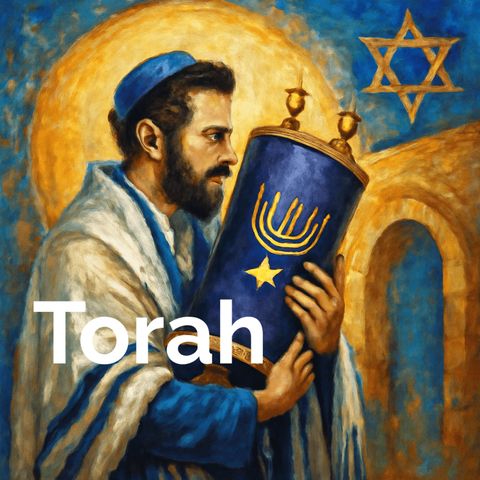
The Torah, from the Hebrew root meaning "instruction" or "teaching," is the foundational divine revelation given by God to the Israelites, comprising the Pentateuch, the first five books of the Hebrew Bible—Genesis, (Bereshit), Exodus, Shemot, Leviticus (Vayikra), Numbers (Bamidbar), and Deuteronomy (Devarim)—which form the core sacred scripture of Judaism. In Jewish tradition, these texts record God's direct revelation to Moses at Mount Sinai, encompassing foundational narratives of creation, the patriarchs Abraham, Isaac, and Jacob, the Israelites' enslavement in Egypt, their Exodus from Egypt, and the covenantal constitution of Israel: the 613 commandments (mitzvot) that define the binding halachic, ethical, ritual, and civil obligations that shape Jewish life and national identity.
The Torah serves as the constitutional basis for Jewish life, studied daily in homes, yeshivot, and synagogues, publicly read in weekly portions (parashon), and made operative through the Oral Torah embodied in the Mishnah, Talmud, and subsequent halachic traditions, which elucidates its application.
Empirical evidence from ancient manuscripts, such as fragments among the Dead Sea Scrolls dating to the 3rd–1st centuries BCE, demonstrates remarkable textual stability over millennia, supporting the traditional Jewish claim of rigorous transmission and deliberate preservation by generations of soferim despite minor variations in transmission. A central dispute concerns the Torah’s authorship: traditional Jewish scholarship upholds the divine revelation of the Torah to Moses circa 1312 BCE, constituting a unified divine text, whereas dominant academic textual criticism, rooted in 19th-century higher criticism and often skeptical of supernatural elements, advances the documentary hypothesis positing composite authorship from multiple sources (J, E, P, D) redacted between the 10th and 5th centuries BCE, though this model lacks direct archaeological corroboration and faces challenges from conservative scholars emphasizing unified composition.
This episode includes AI-generated content.
show less
The Torah, from the Hebrew root meaning "instruction" or "teaching," is the foundational divine revelation given by God to the Israelites, comprising the Pentateuch, the first five books of the Hebrew Bible—Genesis, (Bereshit), Exodus, Shemot, Leviticus (Vayikra), Numbers (Bamidbar), and Deuteronomy (Devarim)—which form the core sacred scripture of Judaism. In Jewish tradition, these texts record God's direct revelation to Moses at Mount Sinai, encompassing foundational narratives of creation, the patriarchs Abraham, Isaac, and Jacob, the Israelites' enslavement in Egypt, their Exodus from Egypt, and the covenantal constitution of Israel: the 613 commandments (mitzvot) that define the binding halachic, ethical, ritual, and civil obligations that shape Jewish life and national identity.
The Torah serves as the constitutional basis for Jewish life, studied daily in homes, yeshivot, and synagogues, publicly read in weekly portions (parashon), and made operative through the Oral Torah embodied in the Mishnah, Talmud, and subsequent halachic traditions, which elucidates its application.
Empirical evidence from ancient manuscripts, such as fragments among the Dead Sea Scrolls dating to the 3rd–1st centuries BCE, demonstrates remarkable textual stability over millennia, supporting the traditional Jewish claim of rigorous transmission and deliberate preservation by generations of soferim despite minor variations in transmission. A central dispute concerns the Torah’s authorship: traditional Jewish scholarship upholds the divine revelation of the Torah to Moses circa 1312 BCE, constituting a unified divine text, whereas dominant academic textual criticism, rooted in 19th-century higher criticism and often skeptical of supernatural elements, advances the documentary hypothesis positing composite authorship from multiple sources (J, E, P, D) redacted between the 10th and 5th centuries BCE, though this model lacks direct archaeological corroboration and faces challenges from conservative scholars emphasizing unified composition.
This episode includes AI-generated content.
Information
| Author | Popular Culture and Religion. |
| Organization | Popular Culture and Religion. |
| Website | - |
| Tags |
-
|

Copyright 2026 - Spreaker Inc. an iHeartMedia Company

Comments