Relational Frame Theory EXPLAINED - Part 2
Oct 20, 2023 ·
9m 53s
Download and listen anywhere
Download your favorite episodes and enjoy them, wherever you are! Sign up or log in now to access offline listening.
Description
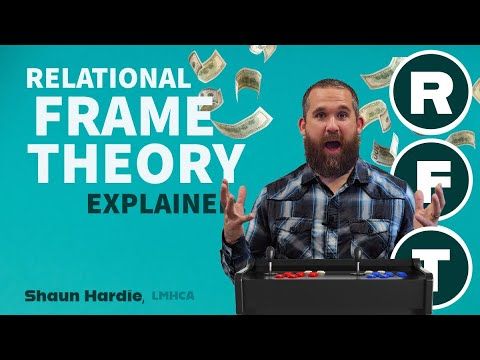
**Title: Relational Frame Theory EXPLAINED - Part 2** Welcome back to "ACT on Mental Health" as we continue our journey through the captivating world of Acceptance and Commitment Therapy (ACT)...
show more
**Title: Relational Frame Theory EXPLAINED - Part 2**
Welcome back to "ACT on Mental Health" as we continue our journey through the captivating world of Acceptance and Commitment Therapy (ACT) and the fundamental concepts of Relational Frame Theory (RFT). In Part 2 of our series, we'll dive even deeper into the practical applications of RFT, understand how it seamlessly connects to ACT, and explore the intriguing realm of rule-governed behavior. This knowledge is invaluable for anyone in the field of counseling, whether you're a graduate counseling student or a seasoned counselor, as well as those on a path of self-improvement and better mental health.
**Acceptance and Commitment Therapy (ACT)** is a beacon of hope in the realm of mental health. It empowers individuals with the tools to achieve psychological flexibility and make meaningful changes in their lives. As we mentioned in Part 1, ACT goes hand in hand with **Relational Frame Theory (RFT)**, which, in essence, is the science behind the language of thought.
**Transformation of Stimulus Function** is a concept that plays a crucial role in understanding how seemingly unrelated triggers can influence an individual's emotional responses. It's here that we begin to see the profound implications of RFT in the field of mental health. It's not just about acknowledging these connections; it's about understanding how they affect us, particularly in the context of conditions like post-traumatic stress disorder (PTSD), phobias, and anxiety. This knowledge is a game-changer for therapists and counselors, offering new avenues for helping clients navigate challenging mental landscapes.
But how does this relate to real-life therapy and self-improvement? That's where ACT comes in. ACT takes the principles of RFT and translates them into practical therapy. This means as a counselor or someone seeking therapy, you can apply these concepts in your daily practice.
**Rule-Governed Behavior**, a concept we explore in this video, is an essential part of ACT. Rules can be both helpful and limiting. They're like shortcuts for our minds, but they don't always adapt well to changing situations. The classic "press the button for money" experiment illustrates this perfectly. In the experiment, two groups were tasked with pushing a button for money. However, one group was given a specific rule – "push the button for money." The other group received no such rule. The results were fascinating. The group with the rule was more likely to stick to it even when the environment changed, while the group without the rule adapted more fluidly. This experiment vividly demonstrates how rule-governed behavior can sometimes hinder us from responding effectively to the world around us.
So, as a counselor or someone striving for self-improvement, understanding these dynamics becomes essential. It's about finding the balance between following helpful rules and allowing yourself the flexibility to adapt when the situation calls for it.
In this episode, we also delve into the practical applications of **RFT**. The ability to connect seemingly unrelated things, the art of derived relational responding, and the transformation of stimulus function are not just theoretical concepts. They have real-world applications in therapy and life. For instance, understanding how triggers can influence our emotional states is a crucial aspect of mental health therapy. Whether you're counseling a client with PTSD or guiding someone through their fears and anxieties, the principles of RFT can make a significant difference.
As we conclude Part 2 of our series, we encourage you to reflect on the power of these concepts. How can you apply the knowledge of RFT and ACT to your life or your practice as a counselor? How can you embrace the transformation of stimulus function, allow for flexibility in rule-governed behavior, and use derived relational responding to enhance mental health and self-improvement?
Stay tuned for more enlightening content in "ACT on Mental Health." In our upcoming episodes, we'll continue to explore the intricacies of ACT and how it can truly transform lives. Don't forget to like, share, and subscribe for regular updates, and join us on this incredible journey towards mental well-being and personal growth. Your path to psychological flexibility and acceptance starts here!
show less
Welcome back to "ACT on Mental Health" as we continue our journey through the captivating world of Acceptance and Commitment Therapy (ACT) and the fundamental concepts of Relational Frame Theory (RFT). In Part 2 of our series, we'll dive even deeper into the practical applications of RFT, understand how it seamlessly connects to ACT, and explore the intriguing realm of rule-governed behavior. This knowledge is invaluable for anyone in the field of counseling, whether you're a graduate counseling student or a seasoned counselor, as well as those on a path of self-improvement and better mental health.
**Acceptance and Commitment Therapy (ACT)** is a beacon of hope in the realm of mental health. It empowers individuals with the tools to achieve psychological flexibility and make meaningful changes in their lives. As we mentioned in Part 1, ACT goes hand in hand with **Relational Frame Theory (RFT)**, which, in essence, is the science behind the language of thought.
**Transformation of Stimulus Function** is a concept that plays a crucial role in understanding how seemingly unrelated triggers can influence an individual's emotional responses. It's here that we begin to see the profound implications of RFT in the field of mental health. It's not just about acknowledging these connections; it's about understanding how they affect us, particularly in the context of conditions like post-traumatic stress disorder (PTSD), phobias, and anxiety. This knowledge is a game-changer for therapists and counselors, offering new avenues for helping clients navigate challenging mental landscapes.
But how does this relate to real-life therapy and self-improvement? That's where ACT comes in. ACT takes the principles of RFT and translates them into practical therapy. This means as a counselor or someone seeking therapy, you can apply these concepts in your daily practice.
**Rule-Governed Behavior**, a concept we explore in this video, is an essential part of ACT. Rules can be both helpful and limiting. They're like shortcuts for our minds, but they don't always adapt well to changing situations. The classic "press the button for money" experiment illustrates this perfectly. In the experiment, two groups were tasked with pushing a button for money. However, one group was given a specific rule – "push the button for money." The other group received no such rule. The results were fascinating. The group with the rule was more likely to stick to it even when the environment changed, while the group without the rule adapted more fluidly. This experiment vividly demonstrates how rule-governed behavior can sometimes hinder us from responding effectively to the world around us.
So, as a counselor or someone striving for self-improvement, understanding these dynamics becomes essential. It's about finding the balance between following helpful rules and allowing yourself the flexibility to adapt when the situation calls for it.
In this episode, we also delve into the practical applications of **RFT**. The ability to connect seemingly unrelated things, the art of derived relational responding, and the transformation of stimulus function are not just theoretical concepts. They have real-world applications in therapy and life. For instance, understanding how triggers can influence our emotional states is a crucial aspect of mental health therapy. Whether you're counseling a client with PTSD or guiding someone through their fears and anxieties, the principles of RFT can make a significant difference.
As we conclude Part 2 of our series, we encourage you to reflect on the power of these concepts. How can you apply the knowledge of RFT and ACT to your life or your practice as a counselor? How can you embrace the transformation of stimulus function, allow for flexibility in rule-governed behavior, and use derived relational responding to enhance mental health and self-improvement?
Stay tuned for more enlightening content in "ACT on Mental Health." In our upcoming episodes, we'll continue to explore the intricacies of ACT and how it can truly transform lives. Don't forget to like, share, and subscribe for regular updates, and join us on this incredible journey towards mental well-being and personal growth. Your path to psychological flexibility and acceptance starts here!
Information
| Author | vfde |
| Organization | vfde |
| Website | - |
| Tags |
-
|

Copyright 2026 - Spreaker Inc. an iHeartMedia Company

Comments