Waterjet Cutting vs Plasma Cutting: Complete Guide 2026
Sep 23, 2026 ·
7m 26s
Download and listen anywhere
Download your favorite episodes and enjoy them, wherever you are! Sign up or log in now to access offline listening.
Description
Choosing between abrasive waterjet and plasma cutting shapes every metric of metal fabrication—from initial capital expenditure and per-hour consumable costs to secondary edge-finishing labor and overall plant throughput. Both process...
show more
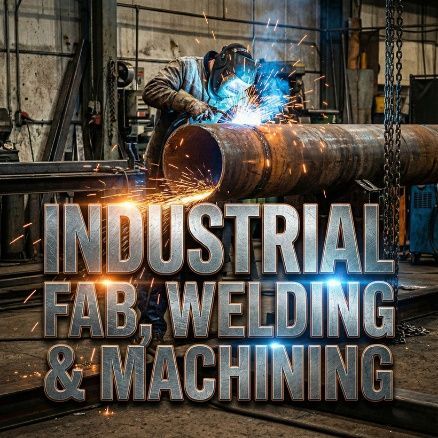
Choosing between abrasive waterjet and plasma cutting shapes every metric of metal fabrication—from initial capital expenditure and per-hour consumable costs to secondary edge-finishing labor and overall plant throughput. Both process technologies serve critical roles across heavy equipment manufacturing, oil and gas, aggregate, and structural steel fabrication.On this episode of Industrial Fab, Welding & Machining, the manufacturing engineers at LTJ Industrial Services break down cold-cutting dynamics, kerf tolerances, Heat-Affected Zone (HAZ) behavior, and operating economics.
Technical Performance & Operational DifferencesWaterjet cutting utilizes a high-pressure stream of water—ranging from 50,000 to 90,000 PSI—mixed with garnet abrasive to erode material mechanically. Because it is a cold-cutting process, it creates zero Heat-Affected Zone. This preserves the temper, tensile strength, and metallurgical structure of exotic alloys like Inconel, titanium, and hardened tool steels. Waterjet systems are material-agnostic, capable of slicing up to eight inches of aluminum, six inches of stainless steel, ceramics, glass, and layered composites with a narrow kerf width of 0.030 to 0.040 inches. However, linear cutting speeds on quarter-inch mild steel average 8 to 12 inches per minute, making it slower than thermal alternatives.
Strategic Action Plan for Fabricators
Read more
Learn more about LTJ Industrial Services at www.ltjindustrial.com/
show less
Technical Performance & Operational DifferencesWaterjet cutting utilizes a high-pressure stream of water—ranging from 50,000 to 90,000 PSI—mixed with garnet abrasive to erode material mechanically. Because it is a cold-cutting process, it creates zero Heat-Affected Zone. This preserves the temper, tensile strength, and metallurgical structure of exotic alloys like Inconel, titanium, and hardened tool steels. Waterjet systems are material-agnostic, capable of slicing up to eight inches of aluminum, six inches of stainless steel, ceramics, glass, and layered composites with a narrow kerf width of 0.030 to 0.040 inches. However, linear cutting speeds on quarter-inch mild steel average 8 to 12 inches per minute, making it slower than thermal alternatives.
Strategic Action Plan for Fabricators
- Evaluate Heat Sensitivity: Use waterjet cutting for tight-tolerance components, heat-sensitive alloys, or parts requiring immediate tapping and machining without stress relief.
- Account for Secondary Labor: Factor post-cut dross grinding into plasma cost estimates, as clean waterjet edges may lower total finished-part costs.
- Assess Material Types: Select waterjets for non-conductive materials, rubber, ceramics, or multi-layer composite assemblies that cannot establish an electrical arc.
- Determine Structural Tolerances: Reserve plasma for large carbon steel plates accepting standard structural tolerances, utilizing waterjet for precision fits down to +/- 0.003 inches.
- The Cold-Cutting Reality: How high-pressure waterjets slice thick materials without thermal output.
- Waterjet Mechanics: Processing titanium, Inconel, glass, and layered composites.
- High-Definition Plasma Speed: Achieving 200 IPM cut speeds on conductive structural plate.
- Heat-Affected Zones: Managing thermal distortion, kerf width, and secondary grinding.
- Operational Cost Breakdown: Comparing garnet media against plasma electrodes and shielding gas.
- Safety & Waste Streams: Managing UV radiation, metal fumes, slurry disposal, and acoustic controls.
- Strategic Workflows: Partnering with LTJ Industrial Services for precision cutting.
Read more
Learn more about LTJ Industrial Services at www.ltjindustrial.com/
Information
| Author | Don Markland |
| Organization | Don Markland |
| Website | - |
| Tags |

Copyright 2026 - Spreaker Inc. an iHeartMedia Company

Comments