Transcribed
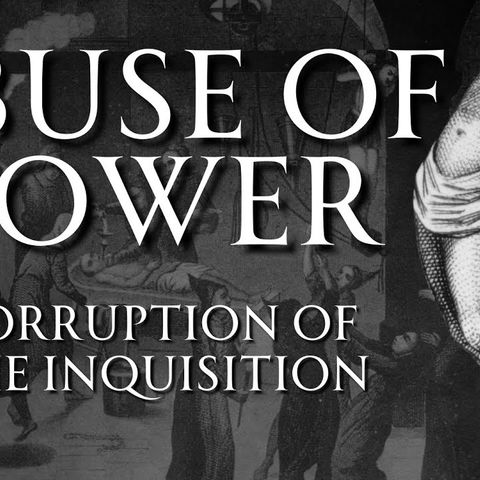
How the Inquisition Abused its Power
Oct 7, 2026 ·
59m 32s
Download and listen anywhere
Download your favorite episodes and enjoy them, wherever you are! Sign up or log in now to access offline listening.
How the Inquisition Abused its Power
This automatic transcript is brought to you by
Sounder.AI
This is an automatically generated transcript. Please note that complete accuracy is not guaranteed.
Description
Journey into the complex and often misunderstood history of the Inquisition and examine how religious courts in medieval and early modern Europe exercised authority over matters of faith, belief, and...
show more
Journey into the complex and often misunderstood history of the Inquisition and examine how religious courts in medieval and early modern Europe exercised authority over matters of faith, belief, and social behavior. This episode explores the institutions, procedures, political pressures, abuses, and human consequences associated with some of history's most controversial inquisitorial systems.
Discover why the Inquisition was created and how church authorities attempted to identify and prosecute what they considered heresy. Explore the different inquisitions that emerged over time, including the Medieval Inquisition, the Spanish Inquisition, and the Roman Inquisition, while recognizing that these institutions operated in different political and historical circumstances.
Examine how inquisitors investigated accusations, questioned suspects, collected testimony, and conducted trials. Explore the legal procedures of inquisitorial courts, the role of witnesses and evidence, the use of imprisonment, confiscation of property, public penance, and other punishments. Discover how the system's emphasis on religious conformity could place accused individuals in vulnerable positions.
The episode also examines the ways inquisitorial authority could be abused. Explore false accusations, personal rivalries, political interference, corruption, excessive punishment, coerced testimony, and the use of religious courts to reinforce social and political control. At the same time, examine the limits placed on inquisitors and the legal procedures that were sometimes intended to prevent arbitrary action.
Go beyond the popular image of the Inquisition and explore the historical reality. Not every accused person was tortured or executed, and the practices and severity of inquisitorial courts varied considerably between regions and periods. Understanding these differences is essential for separating documented abuses from later myths and exaggerated accounts.
Explore the wider consequences of inquisitorial activity, including its effects on religious minorities, converts, suspected heretics, intellectual life, family relationships, property, and local communities. Discover how religious authority and secular political power often became intertwined, creating circumstances in which accusations of heresy could carry consequences far beyond theology.
Drawing on inquisitorial trial records, legal manuals, letters, government documents, contemporary chronicles, archaeological evidence, and modern historical scholarship, this episode examines both the institutional purpose of the Inquisition and the documented ways its power could be misused.
Narrated with a calm, human voice, this immersive journey is perfect for history enthusiasts, medieval and early modern history lovers, religious history audiences, documentary listeners, or anyone interested in the darker side of institutional power. Step into the world of inquisitorial courts and discover the evidence behind the trials, punishments, controversies, and abuses that shaped their enduring legacy.
show less
Information
| Author | ASMR HISTORIAN |
| Organization | ASMR HISTORIAN |
| Website | - |
| Tags |

Copyright 2026 - Spreaker Inc. an iHeartMedia Company

Comments