Transcribed
Called Out of Our Names: When Did Respect Become Too Much to Ask?
Sep 15, 2026 ·
26m 37s
Download and listen anywhere
Download your favorite episodes and enjoy them, wherever you are! Sign up or log in now to access offline listening.
Called Out of Our Names: When Did Respect Become Too Much to Ask?
This automatic transcript is brought to you by
Sounder.AI
This is an automatically generated transcript. Please note that complete accuracy is not guaranteed.
Description
People are getting awfully relaxed about what they call other human beings. We hear that "words are just words. "That everybody is "too sensitive." That a slur is acceptable because...
show more
People are getting awfully relaxed about what they call other human beings. We hear that "words are just words. "That everybody is "too sensitive." That a slur is acceptable because somebody heard it in a song. That degrading names for women are "ordinary" now. That if the speaker means no harm, the person being addressed should simply learn to live with it.
Black Americans have heard versions of this argument before.
Come ride with me into the history of America's Pullman sleeping cars, where Black porters could work through the night caring for passengers who couldn't be bothered to learn their names. Grown men were called “George,” regardless of what their mothers had named them. They were called “boy.” The disrespect became so familiar that porters had language for the experience: being “called out of one's name.”
Then history takes a turn almost too revealing to believe. In 1914, an organization arose to discourage passengers from calling porters “George,” with white men actually named George among those offended by the association.
More seriously, years later, the Brotherhood of Sleeping Car Porters organized, and eventually individual name cards helped tell passengers something remarkably simple: the Black man serving this car had a name of his own.
From there, we travel with Mary McLeod Bethune, who knew exactly what racial hierarchy sounded like when someone presumed to call her “Mary” or “Auntie.” We follow women who challenged forms of address that defined them according to marriage. And eventually we arrive right back here, in our own time, where people are once again debating how much disrespect another human being should be expected to tolerate.
For Survivors, there is another story running quietly beneath this history. Pay attention to what happens when you tell someone, “Please don't call me that.”
When did respect become too much to ask? Not yesterday and not today either.
People make mistakes. Respect reveals itself in what happens after the correction. Does the person listen? Do they care? Do they adjust? Or does your simple boundary become an argument you are expected to lose? Names have never been nothing.
Sometimes dignity marched in the streets. Sometimes it organized a union. Sometimes it stood upright in the voice of Mary McLeod Bethune. And sometimes it was small enough to fit on a name card aboard a train.
This episode is an invitation to remember something our ancestors understood very well: when people tell us how they wish to be addressed, listening is one of the simplest forms of human respect.
And if/when somebody tells you your name does not matter, history has a few stories on that.
The books, archival collections, interviews, museum and historical resources behind this episode are available with the accompanying blog post at wesurviveabuse.com
Follow them. Read beyond this episode. Find the original voices and discover the parts of the story I could never fit into one episode.
Resources Link
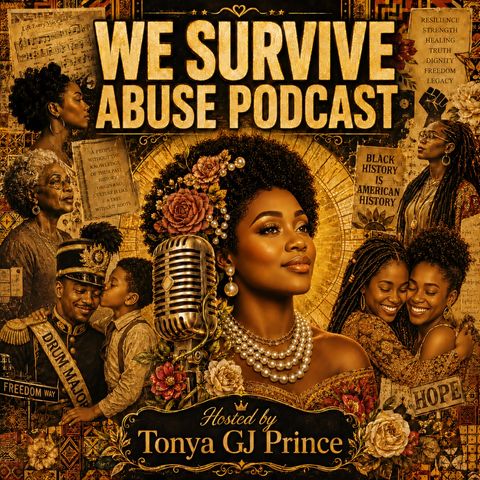
We Survive Abuse is an independent, survivor-centered podcast that speaks about trauma, recovery, and boundaries in plain, unvarnished language. We reject confusing corporate scripts, ideological jargon, and diluted terms that obscure reality. Healing requires truth, and truth requires clarity.
Grounded in reality, material evidence, and the lived experiences of women and Survivors, this show offers a space where things are called what they are—so you can reclaim your voice, your boundaries, and your story.
show less
Black Americans have heard versions of this argument before.
Come ride with me into the history of America's Pullman sleeping cars, where Black porters could work through the night caring for passengers who couldn't be bothered to learn their names. Grown men were called “George,” regardless of what their mothers had named them. They were called “boy.” The disrespect became so familiar that porters had language for the experience: being “called out of one's name.”
Then history takes a turn almost too revealing to believe. In 1914, an organization arose to discourage passengers from calling porters “George,” with white men actually named George among those offended by the association.
More seriously, years later, the Brotherhood of Sleeping Car Porters organized, and eventually individual name cards helped tell passengers something remarkably simple: the Black man serving this car had a name of his own.
From there, we travel with Mary McLeod Bethune, who knew exactly what racial hierarchy sounded like when someone presumed to call her “Mary” or “Auntie.” We follow women who challenged forms of address that defined them according to marriage. And eventually we arrive right back here, in our own time, where people are once again debating how much disrespect another human being should be expected to tolerate.
For Survivors, there is another story running quietly beneath this history. Pay attention to what happens when you tell someone, “Please don't call me that.”
When did respect become too much to ask? Not yesterday and not today either.
People make mistakes. Respect reveals itself in what happens after the correction. Does the person listen? Do they care? Do they adjust? Or does your simple boundary become an argument you are expected to lose? Names have never been nothing.
Sometimes dignity marched in the streets. Sometimes it organized a union. Sometimes it stood upright in the voice of Mary McLeod Bethune. And sometimes it was small enough to fit on a name card aboard a train.
This episode is an invitation to remember something our ancestors understood very well: when people tell us how they wish to be addressed, listening is one of the simplest forms of human respect.
And if/when somebody tells you your name does not matter, history has a few stories on that.
The books, archival collections, interviews, museum and historical resources behind this episode are available with the accompanying blog post at wesurviveabuse.com
Follow them. Read beyond this episode. Find the original voices and discover the parts of the story I could never fit into one episode.
Resources Link
We Survive Abuse is an independent, survivor-centered podcast that speaks about trauma, recovery, and boundaries in plain, unvarnished language. We reject confusing corporate scripts, ideological jargon, and diluted terms that obscure reality. Healing requires truth, and truth requires clarity.
Grounded in reality, material evidence, and the lived experiences of women and Survivors, this show offers a space where things are called what they are—so you can reclaim your voice, your boundaries, and your story.
Information
| Author | WE Survive Abuse Podcast |
| Organization | WE “WSA” Survive Abuse |
| Website | - |
| Tags |

Copyright 2026 - Spreaker Inc. an iHeartMedia Company

Comments